

Wood Fence Installation in Chicagoland
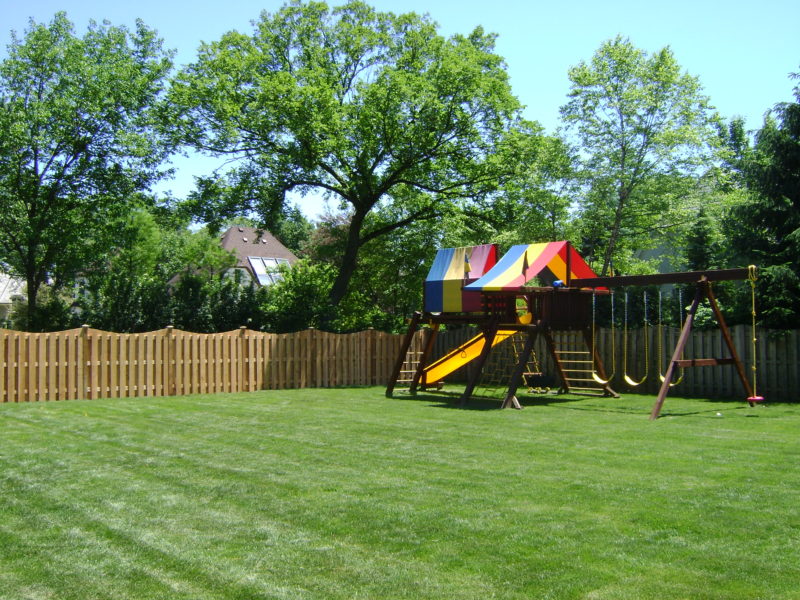
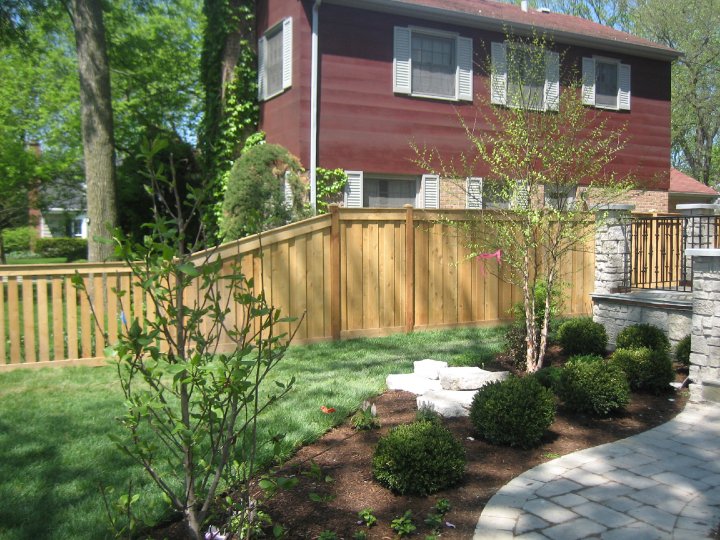
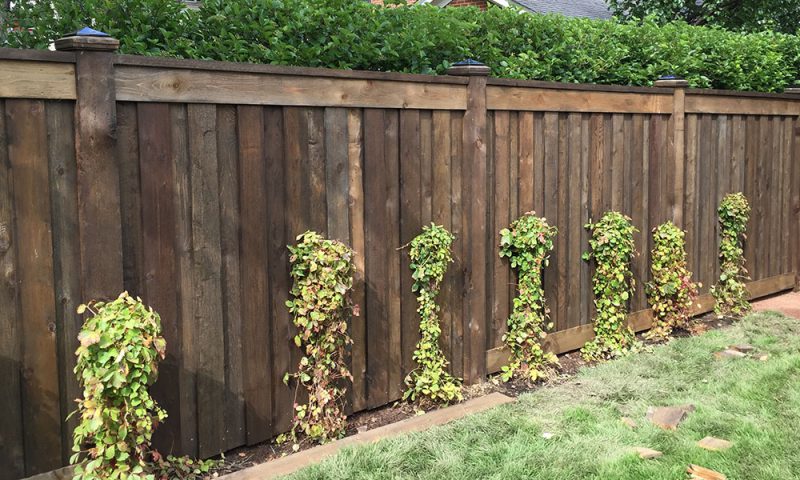
A wood fence usually starts with a practical problem. You may need to enclose the yard for a dog or young children, create privacy from a neighbor’s second-story deck, or replace a fence that came through last winter leaning and weathered. In other cases, a new home simply needs the boundary it never had. Whatever brings you to the project, the questions are usually the same: Which style makes sense? What type of wood should you choose? How much will it cost?
A well-designed wood fence should do more than mark the edge of your property. It should provide the privacy, security, and curb appeal you want while being built to handle the conditions where you live.
First Fence Company has been building wood fences and custom wood gates across the Chicago area since 1989. We’re a family-owned contractor based in Hillside, which puts our crews within a short drive of most of the western and northwest suburbs including Elmhurst, Oak Park, Berwyn, Villa Park, Downers Grove, La Grange, Lombard, Wheaton, Des Plaines, Naperville, and the towns in between. Every fence we install is built and set for this climate.
Cedar Wood Fence Styles We Build in Chicagoland
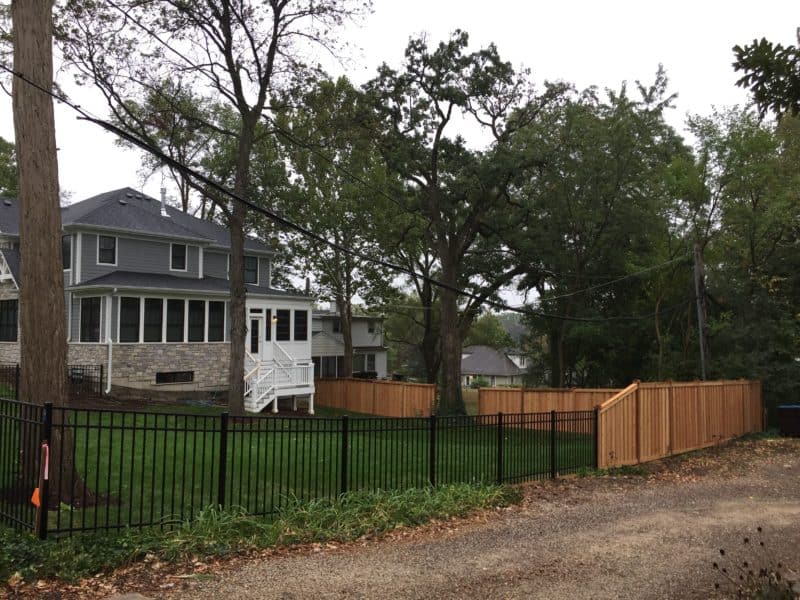
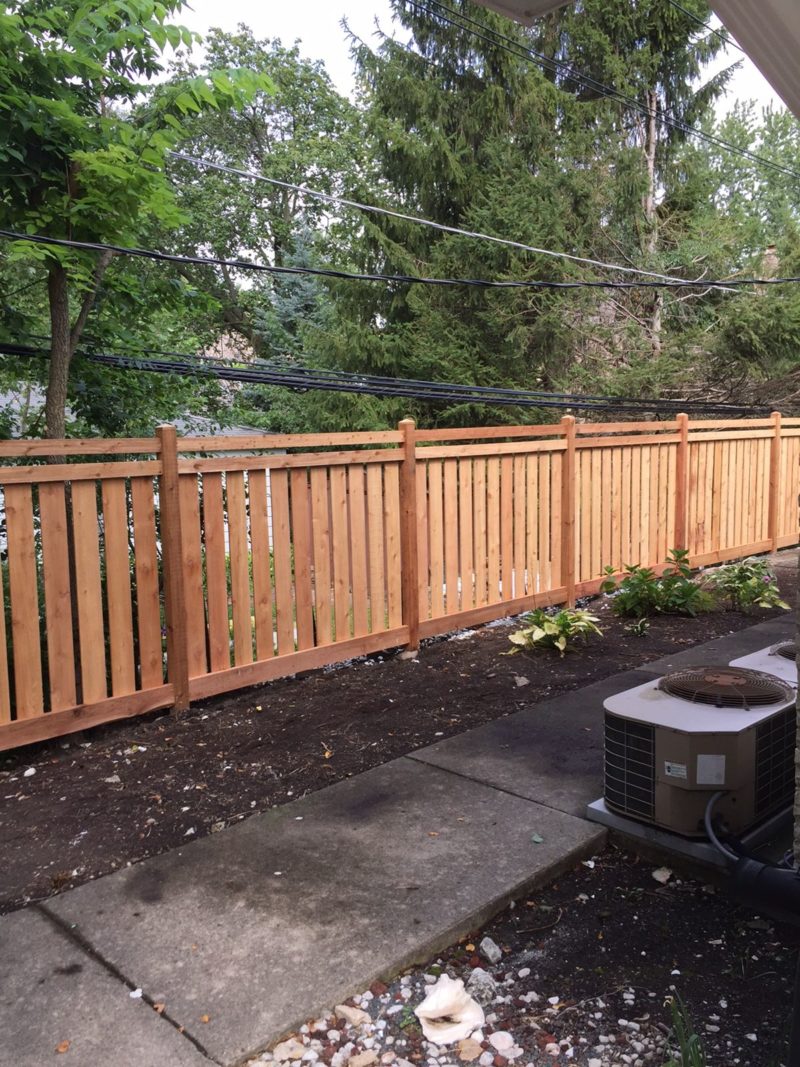
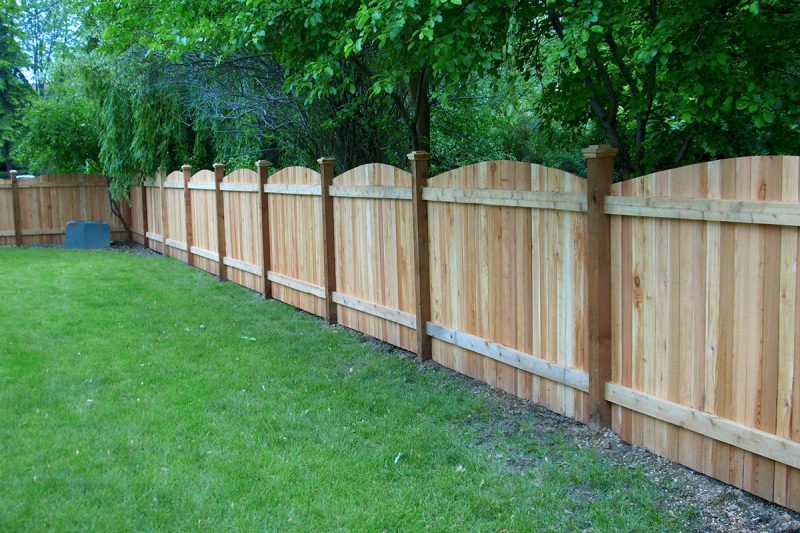
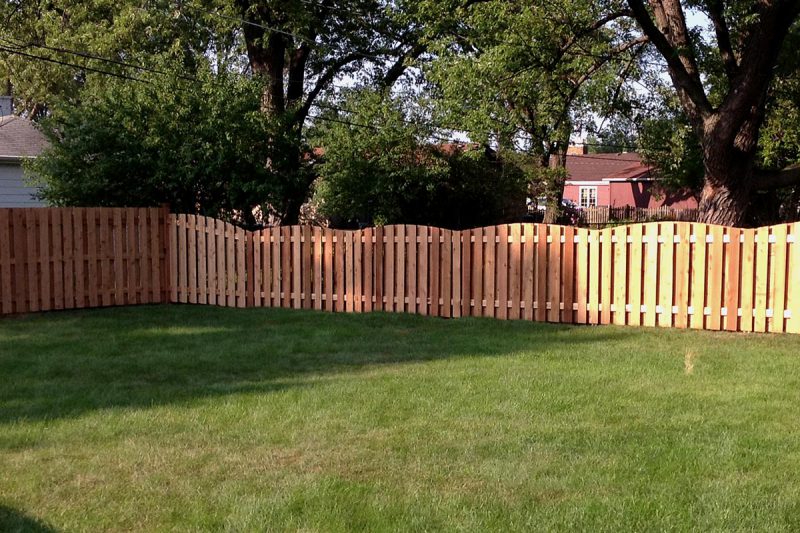
Wood fencing can be simple and traditional or designed to make a stronger statement. We build a range of styles to match your home, property, privacy needs, and budget, with options for both classic curb appeal and more customized looks.
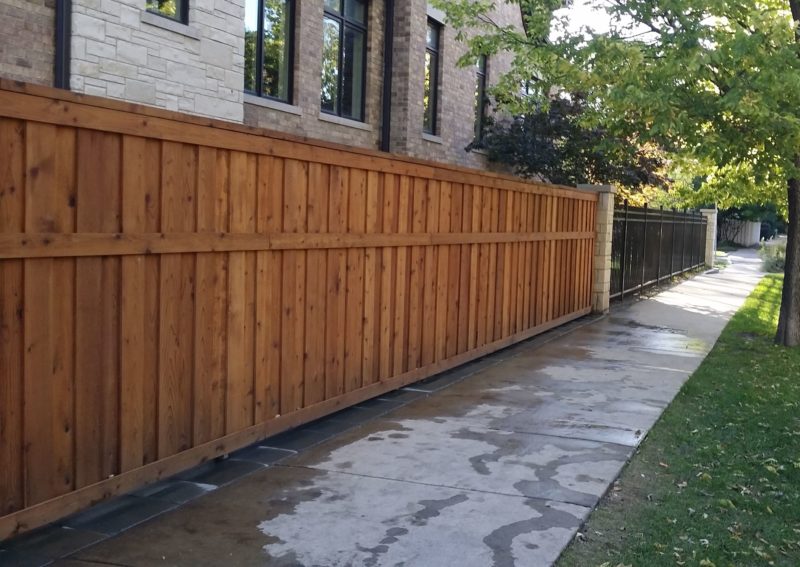
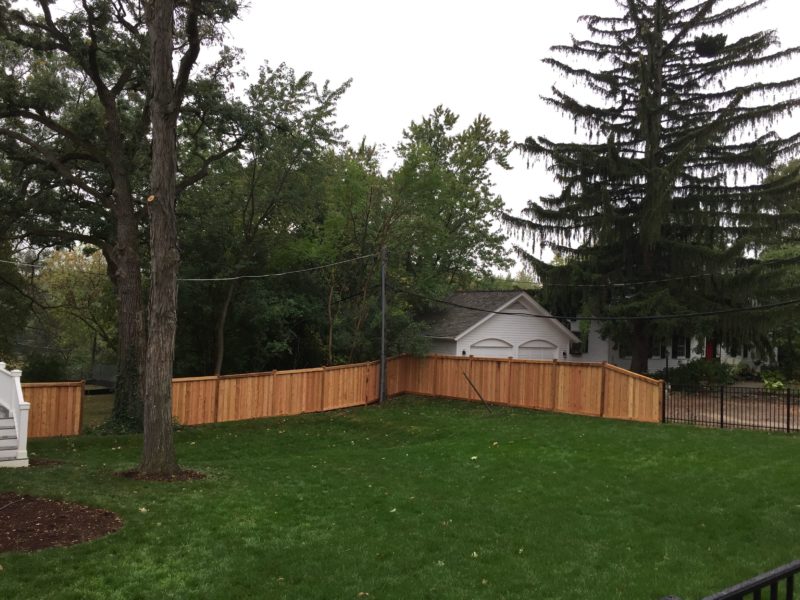
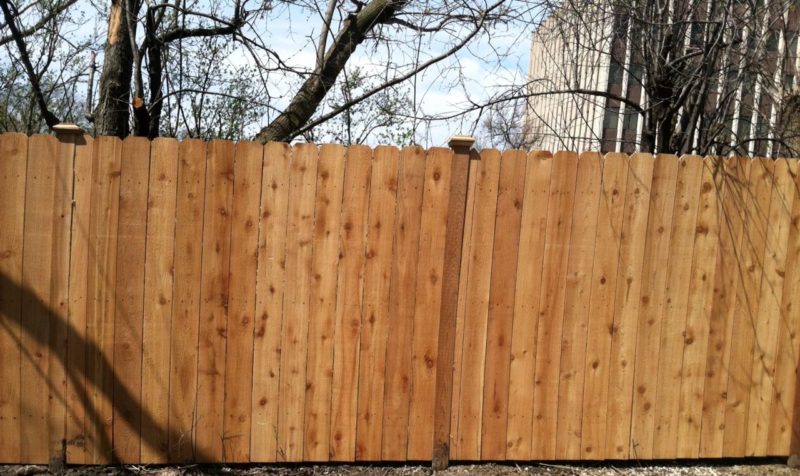
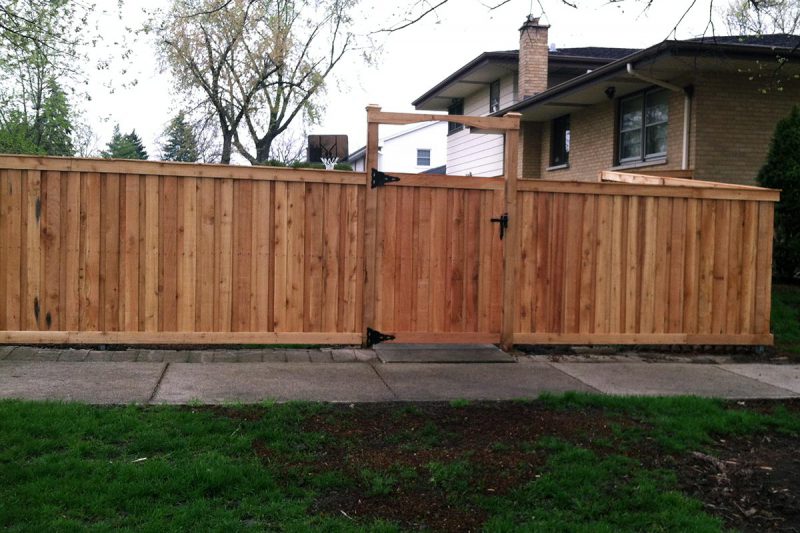
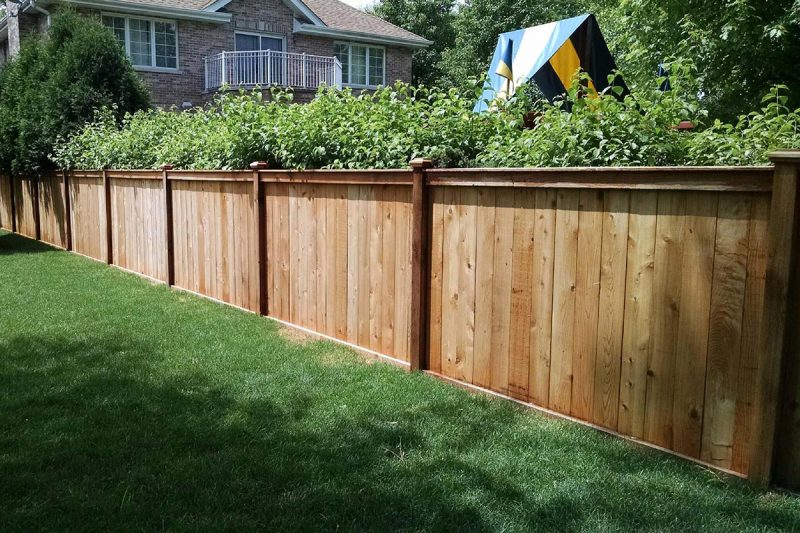
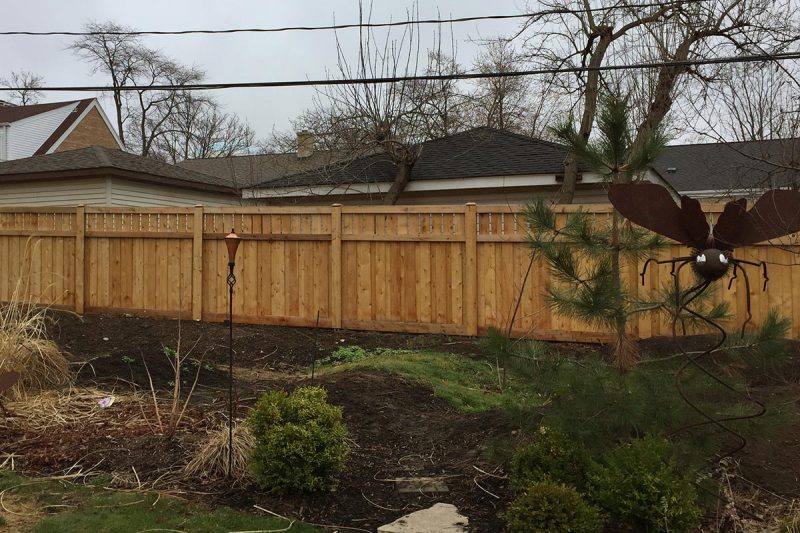
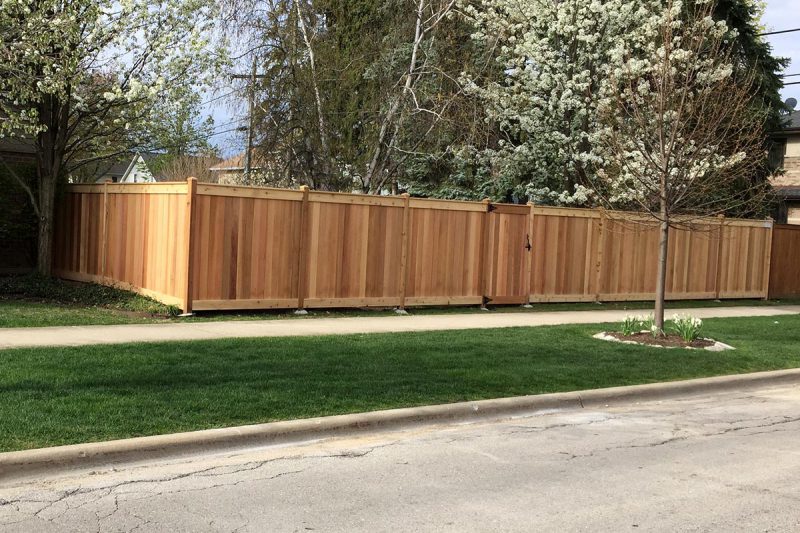
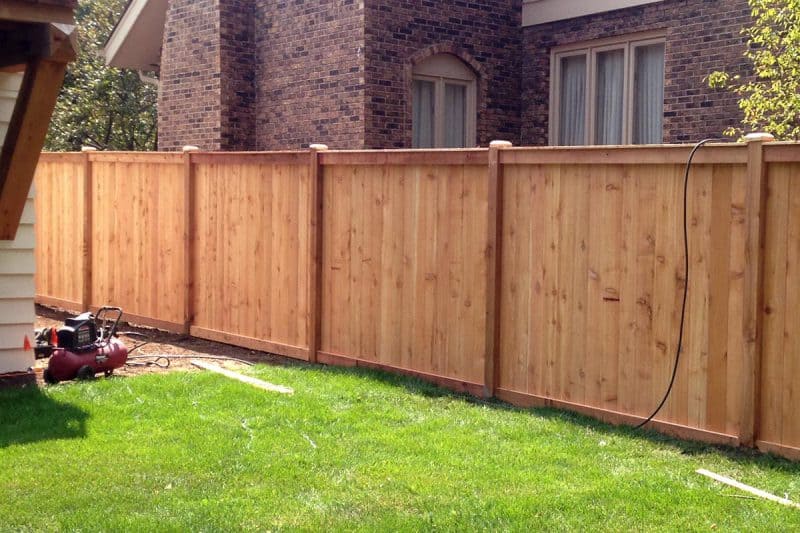
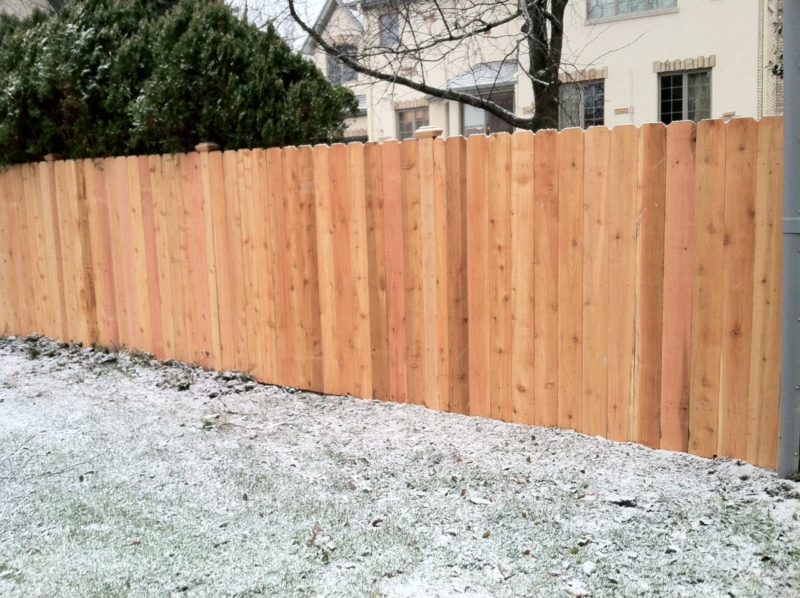
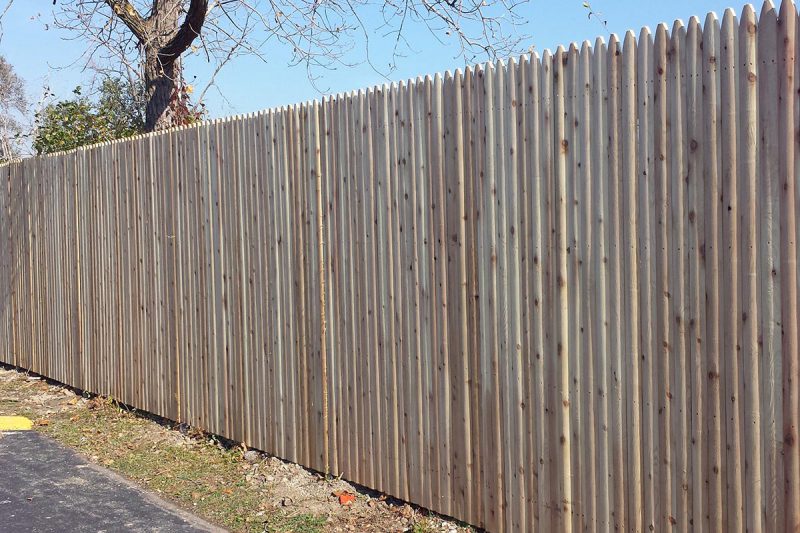
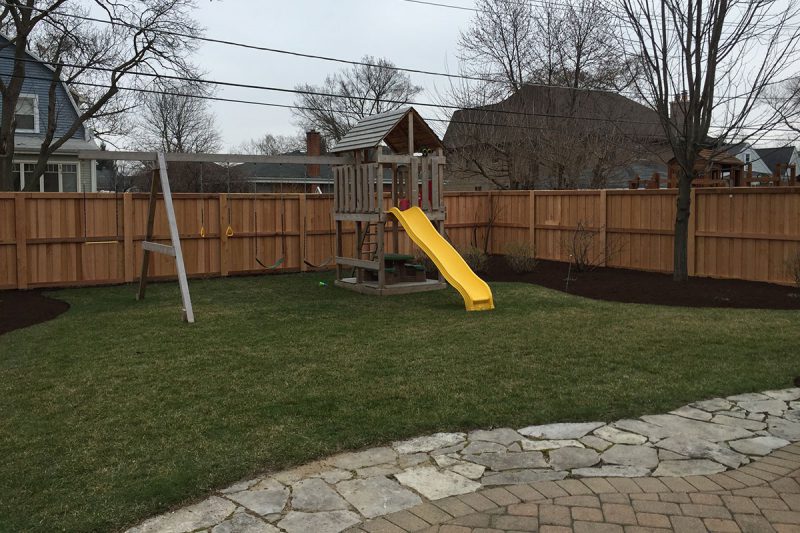
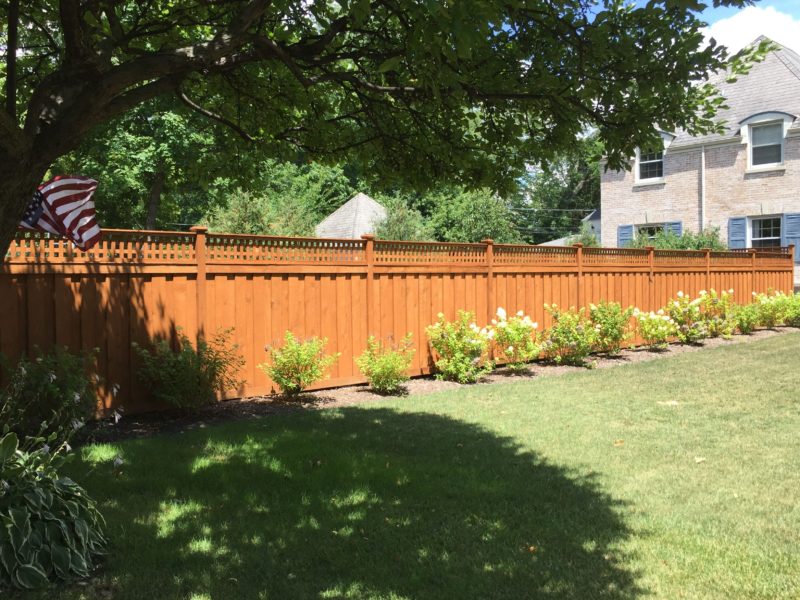
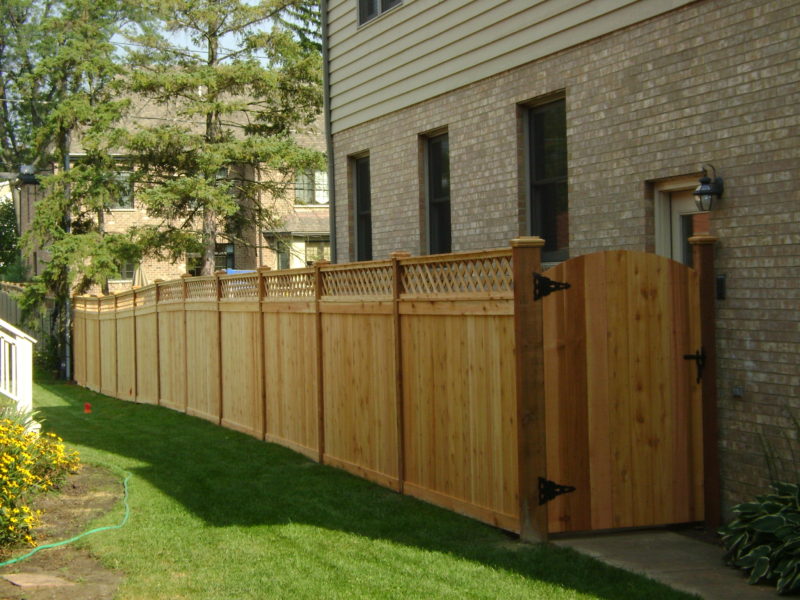
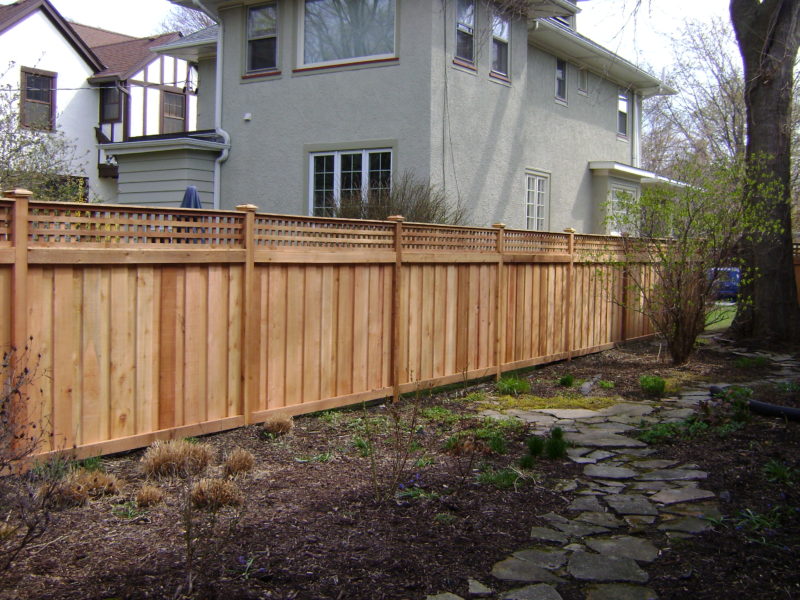
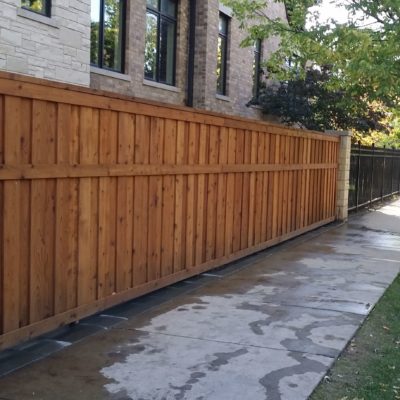
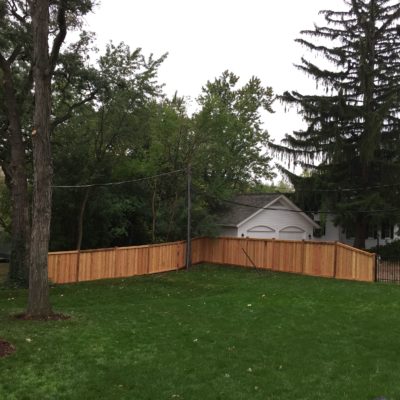
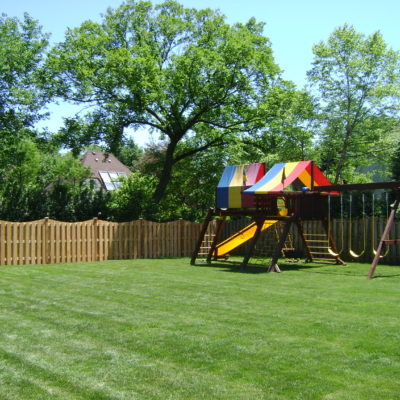
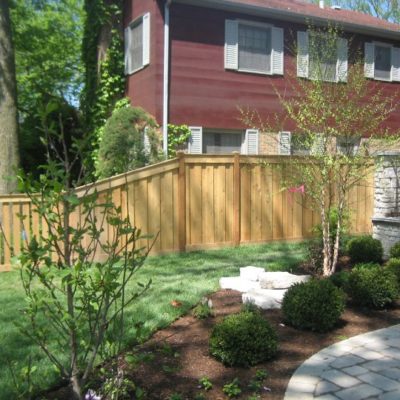
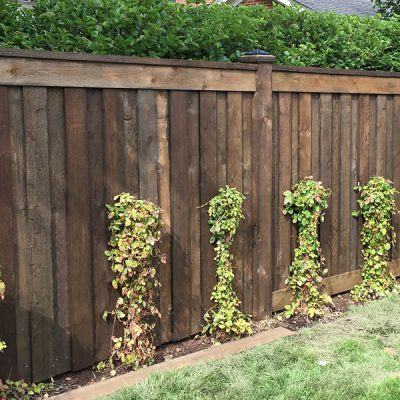
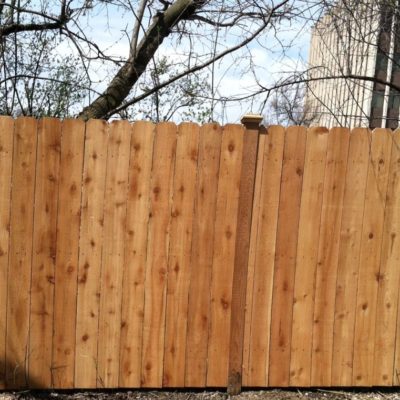
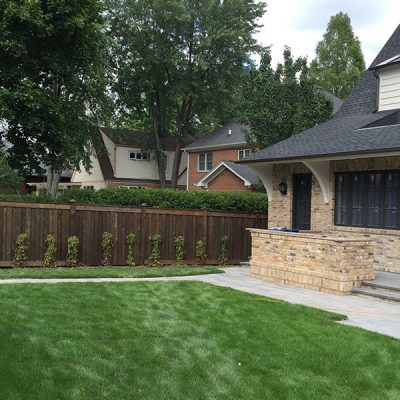
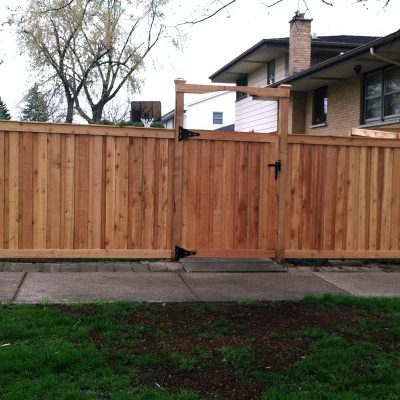
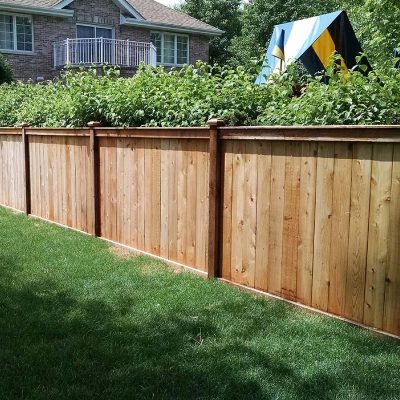
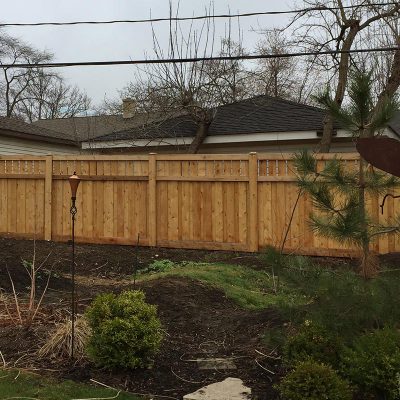
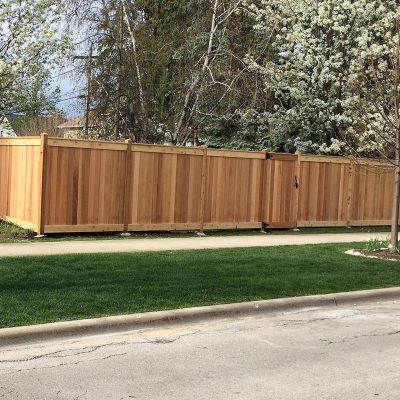
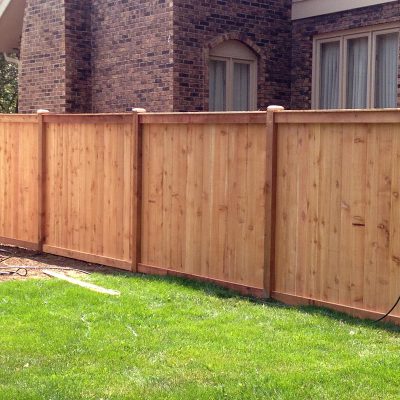
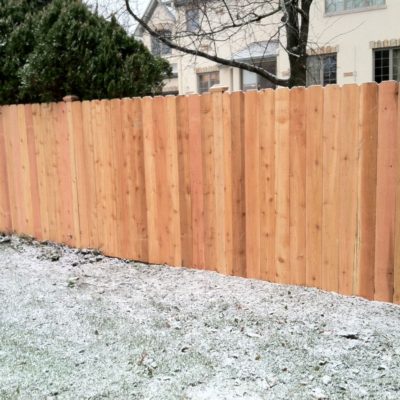
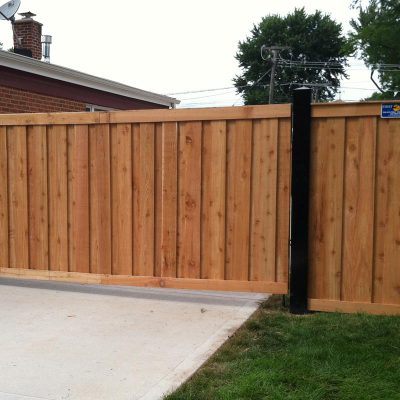
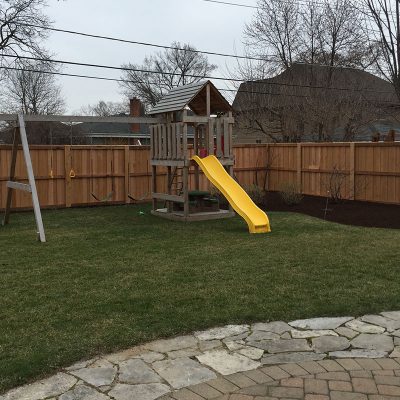
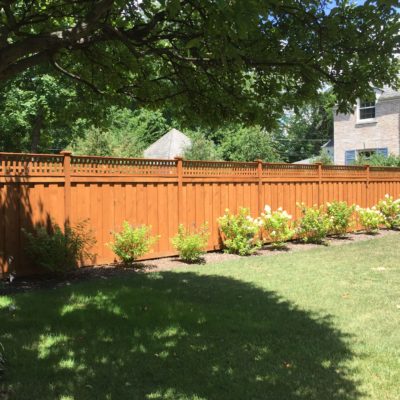
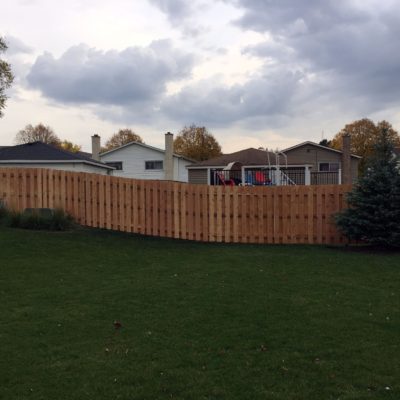
- Solid board privacy fencing: Boards butted edge to edge with no gaps, usually 6 feet tall, most often with a dog-ear or flat top. This is the workhorse of Chicagoland backyards and the most requested privacy fence we install. It’s mid-range in cost and gives you the most screening per dollar. The one trade-off: a fully solid panel catches wind, which is why post depth and spacing matter more here than on any other style. Post Masters increase a wood fence’s lifespan, are rated higher in wind resistance, and extend the life of the fence against post rot.
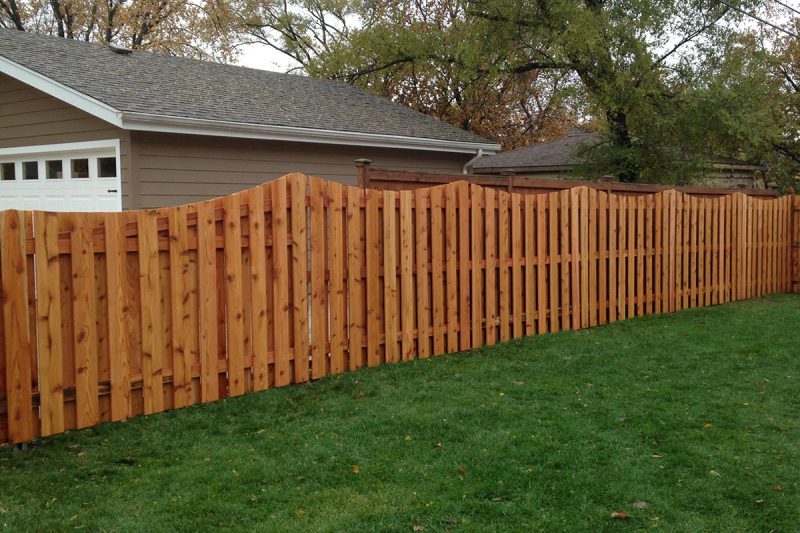
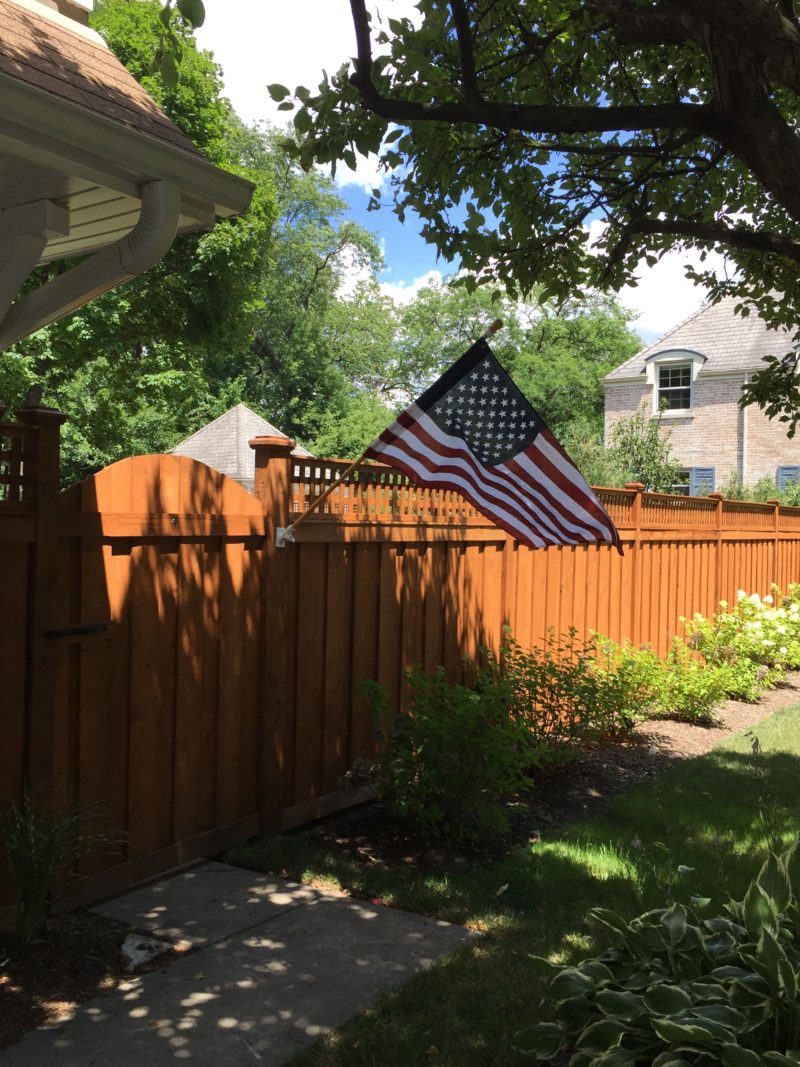
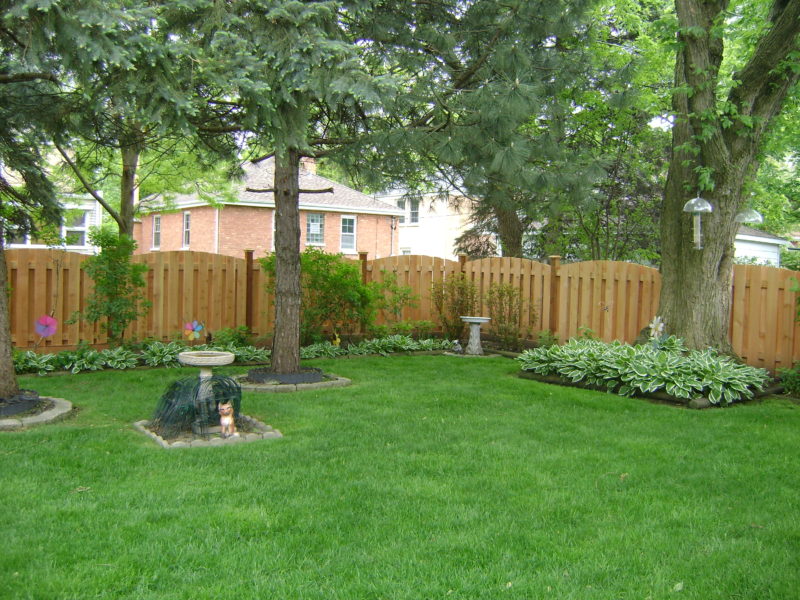
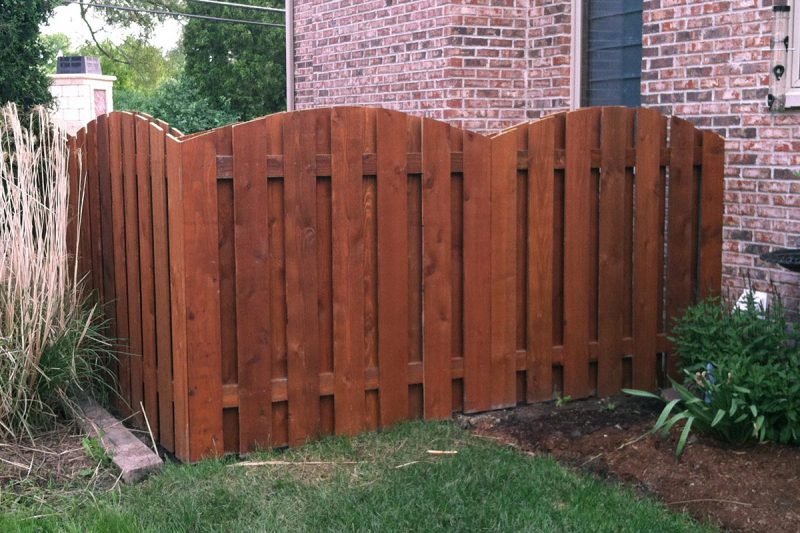
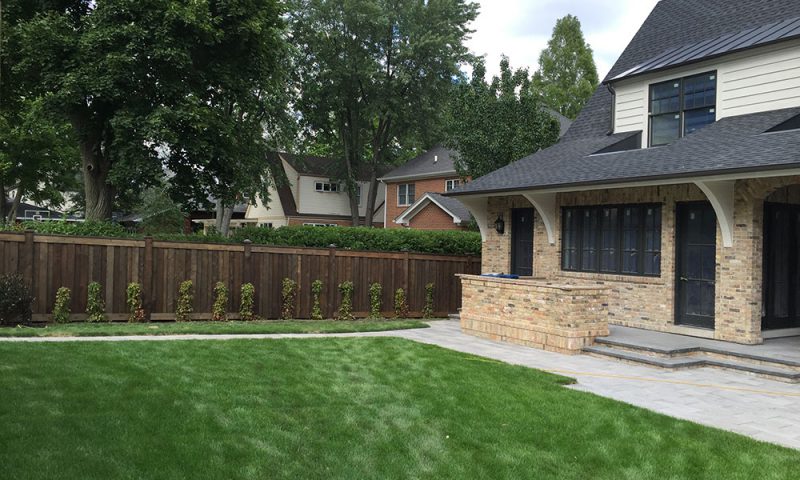
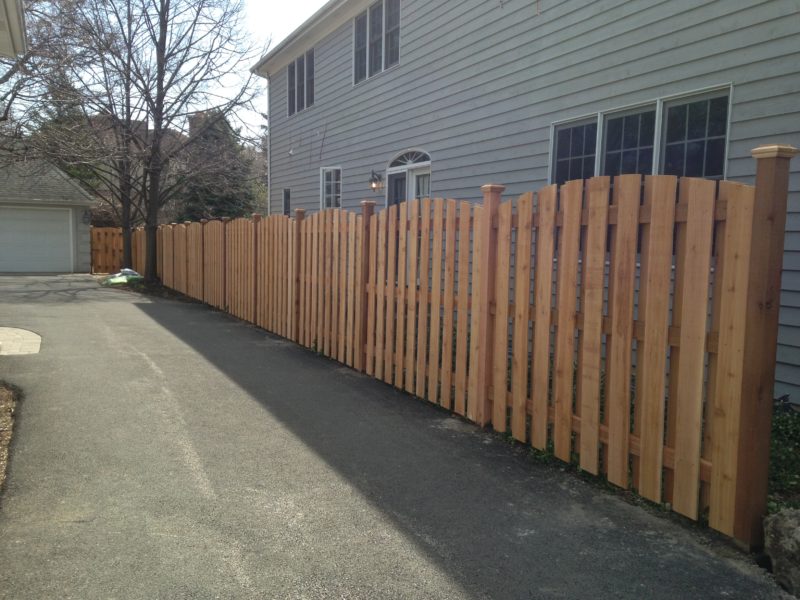
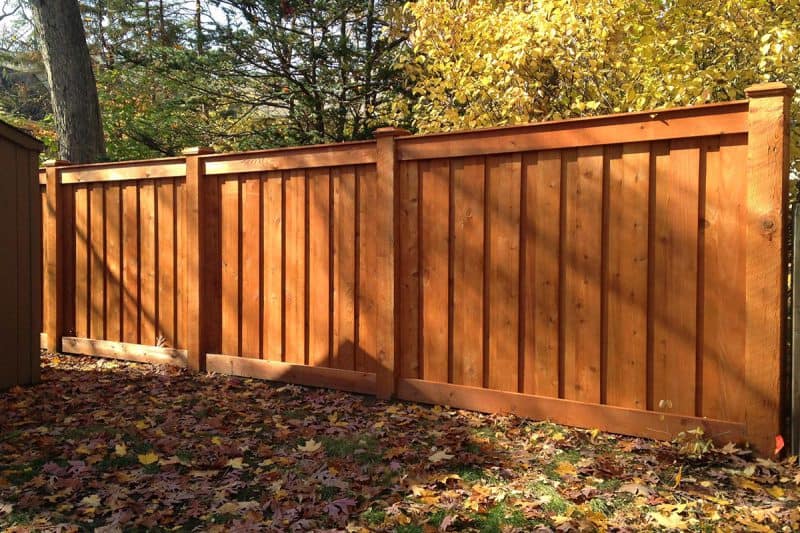
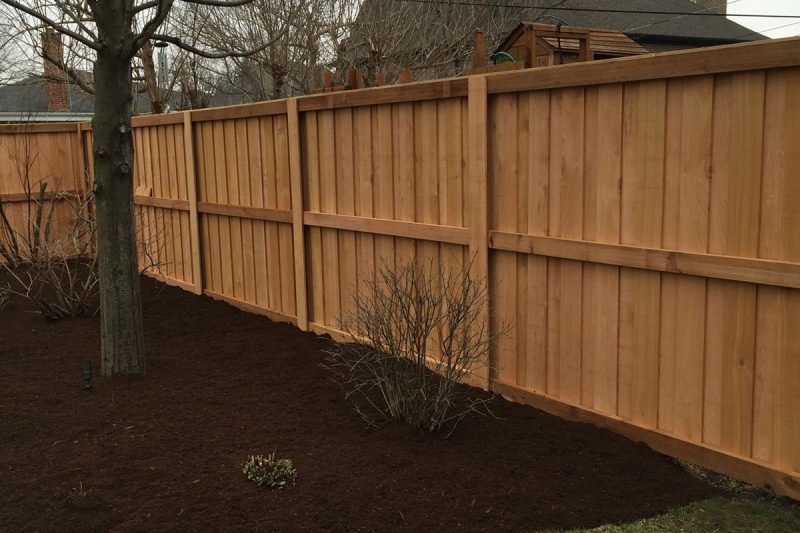
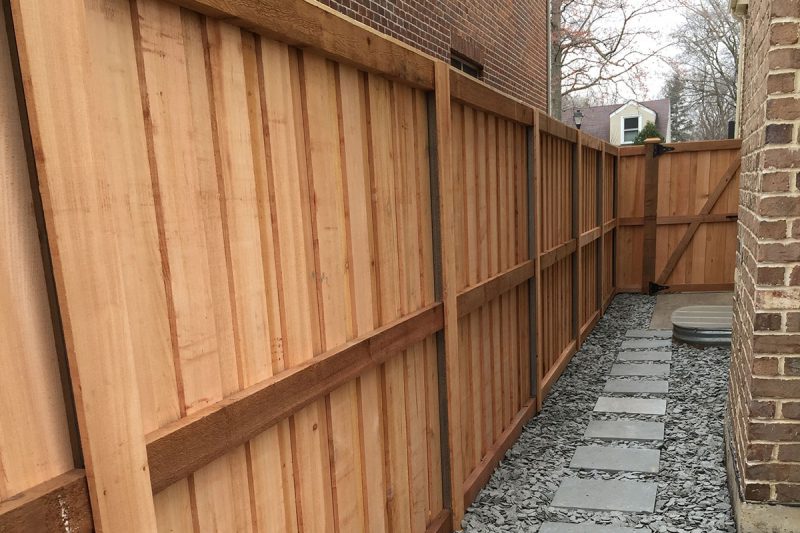
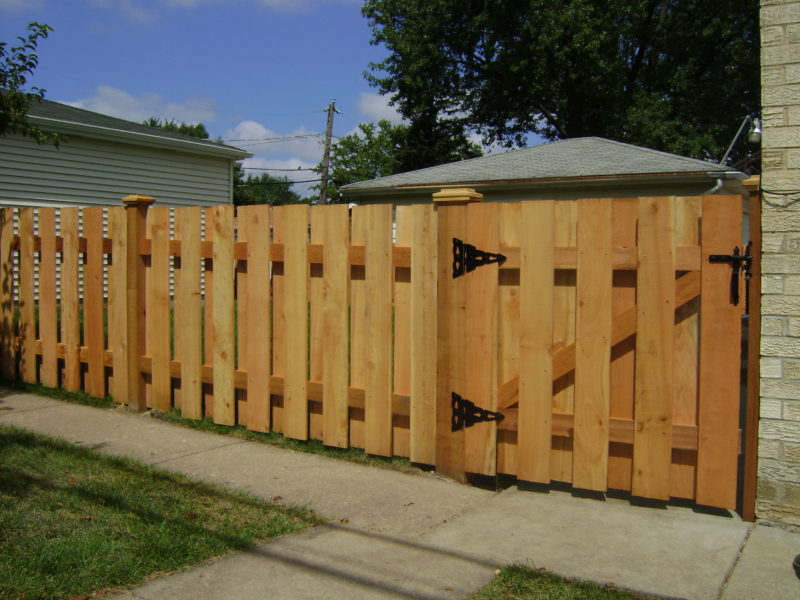
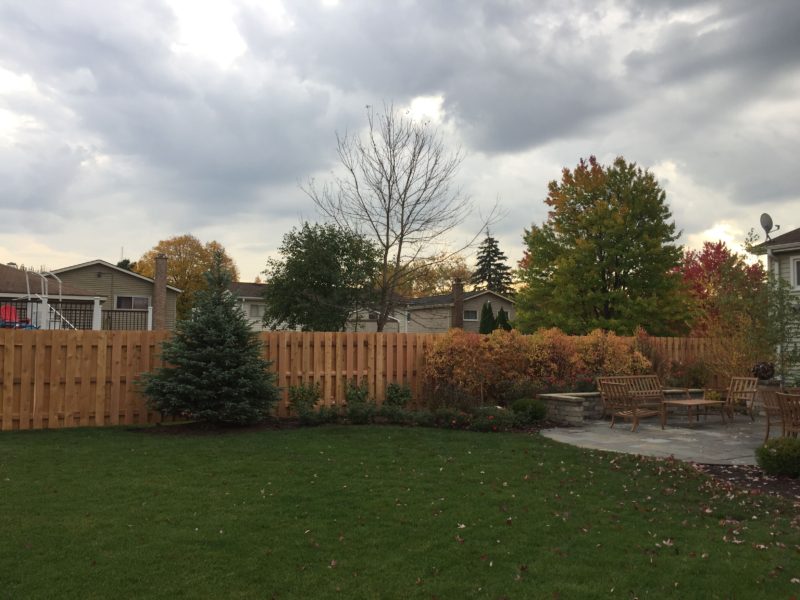
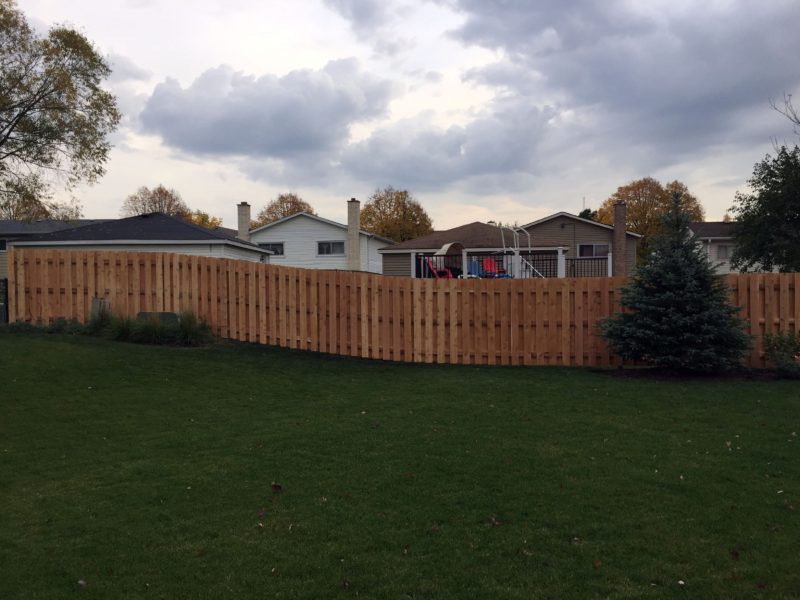
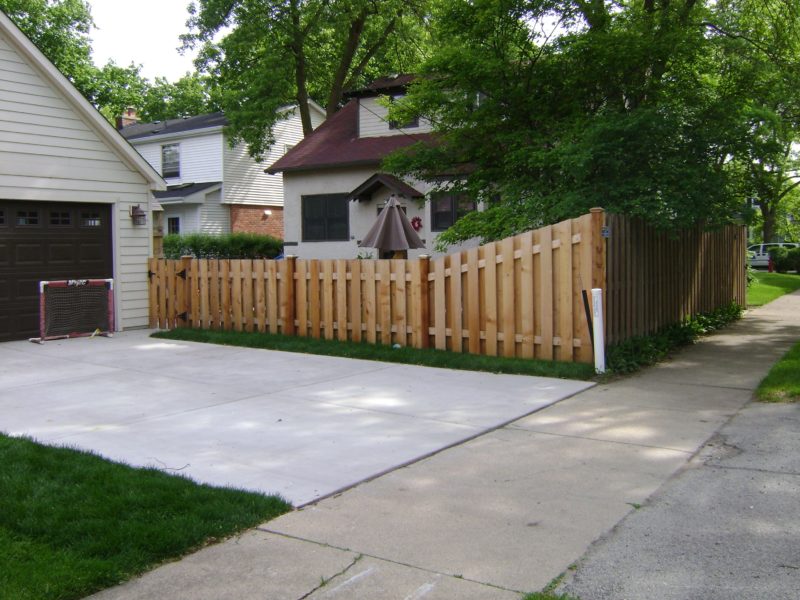
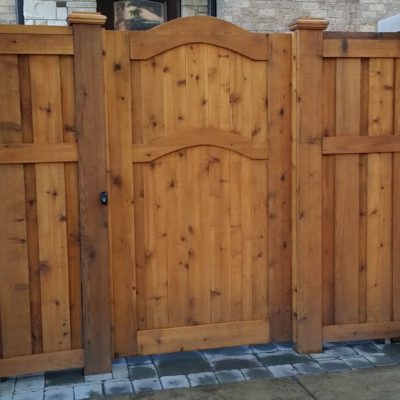
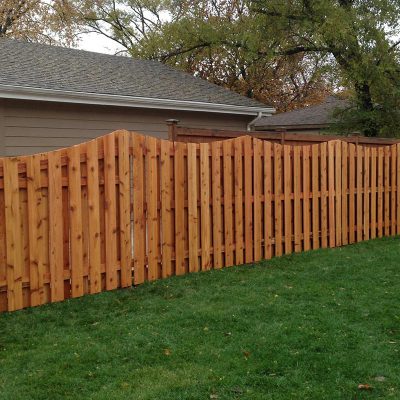
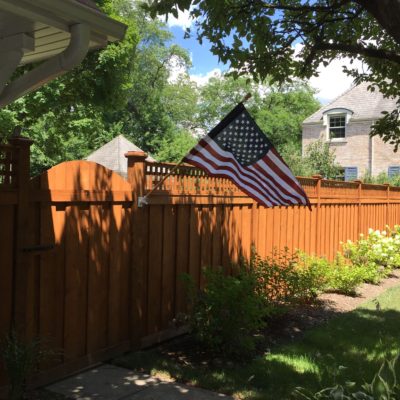
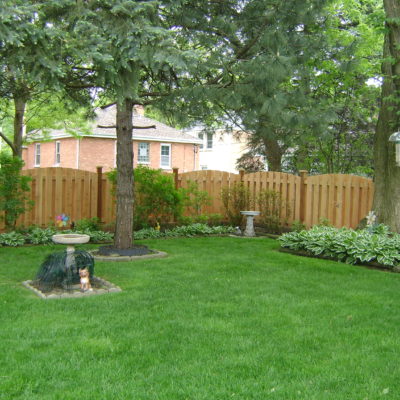
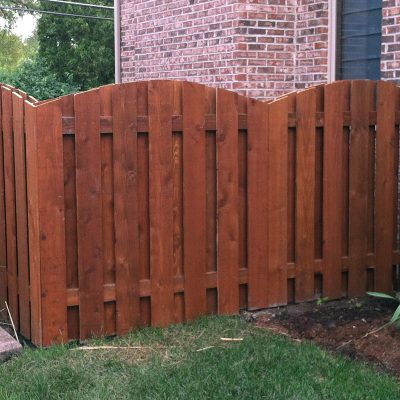
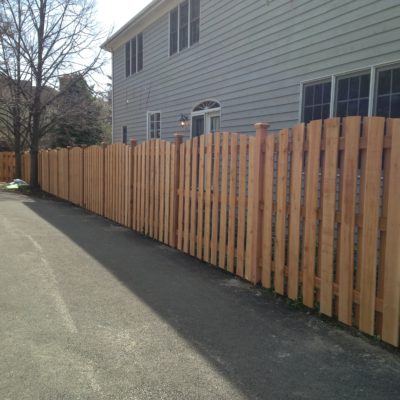
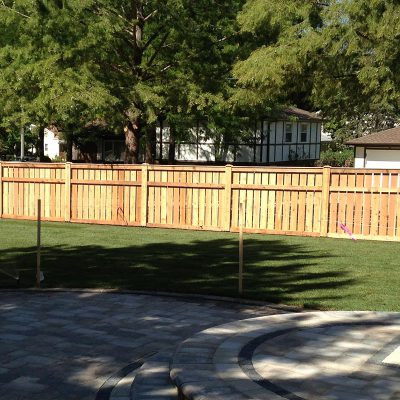
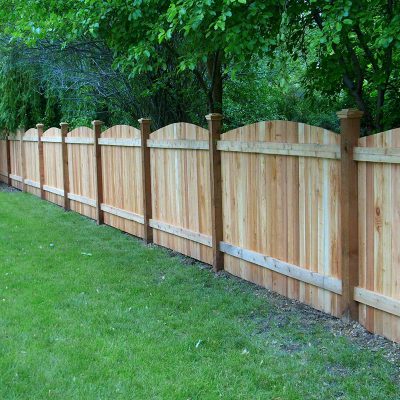
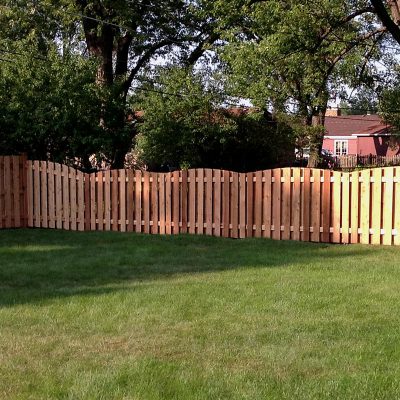
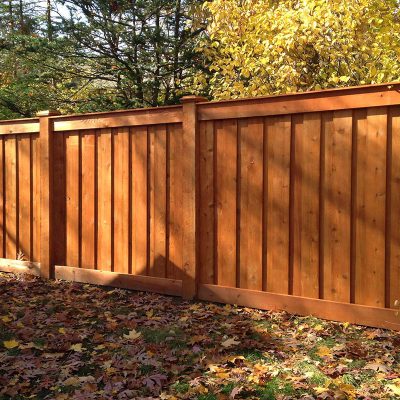
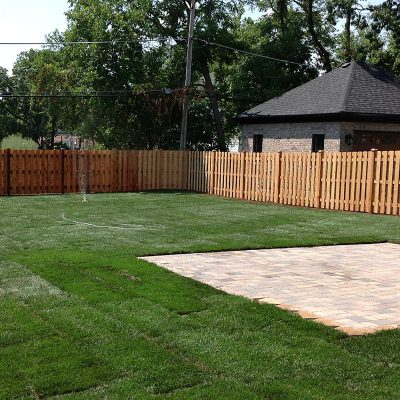
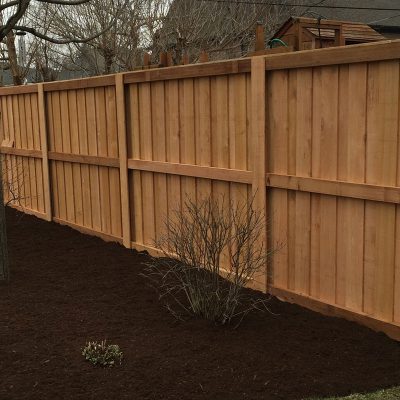
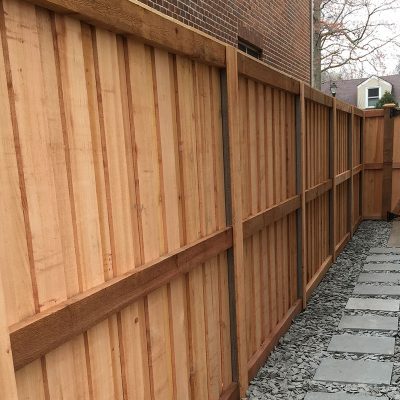
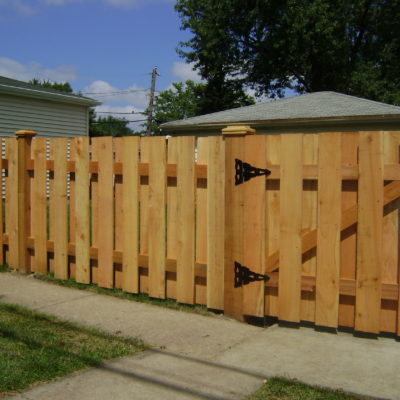
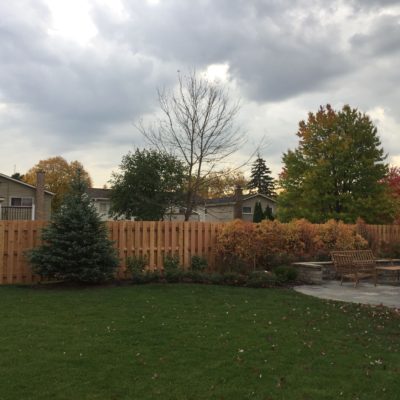
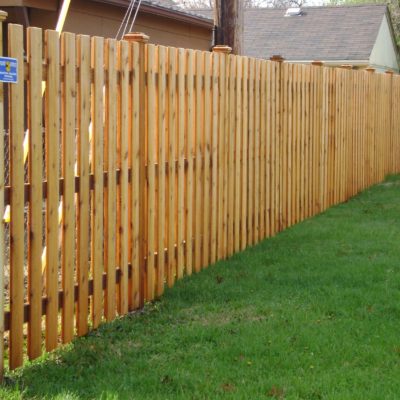
- Board-on-board (shadowbox): Boards alternate front and back of the rails, overlapping at the edges. You get near-total privacy from straight on, semi privacy from an angle, some airflow, and a fence that looks finished from both sides, which keeps the conversation with your neighbor easy. It uses more lumber than solid board, so it typically costs more. We build it flat-top, scalloped, or arched.
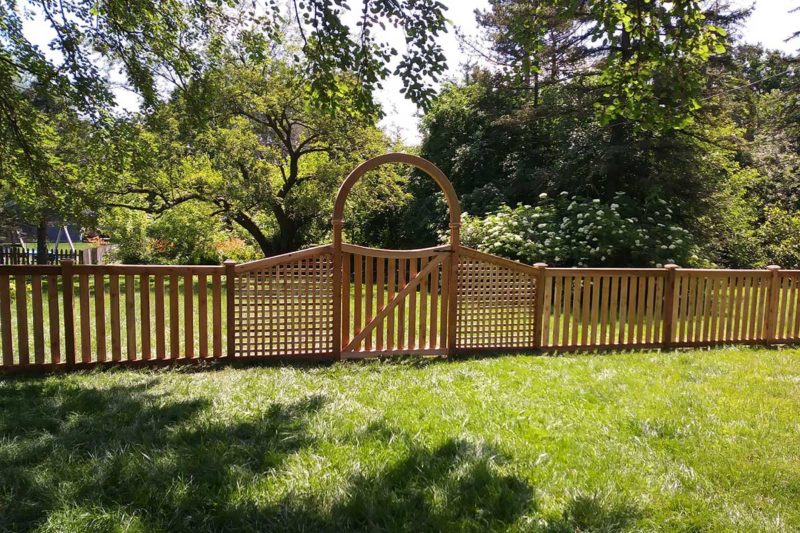
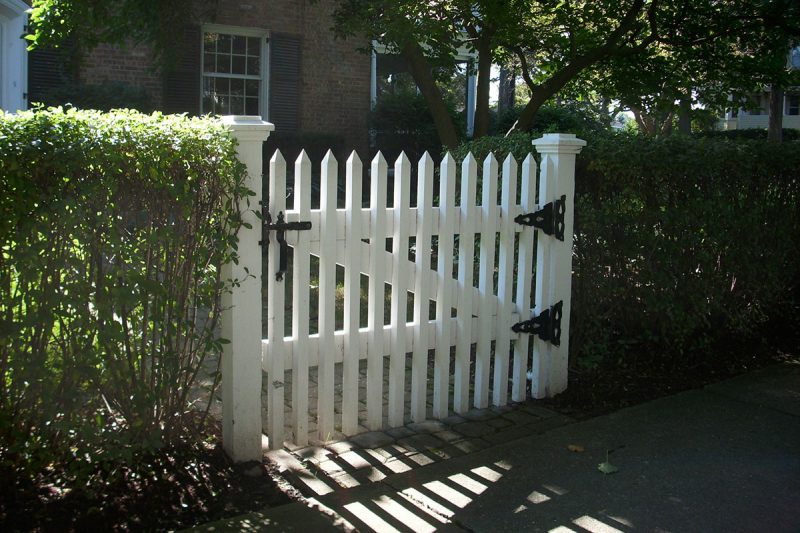
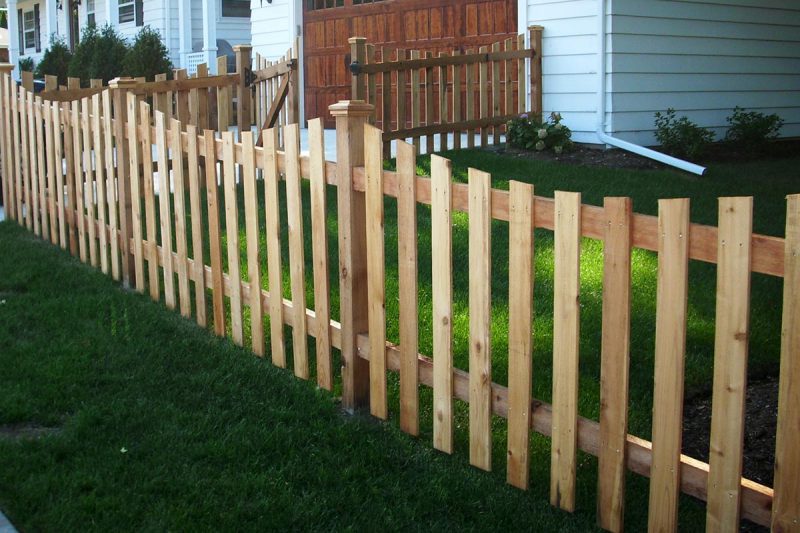
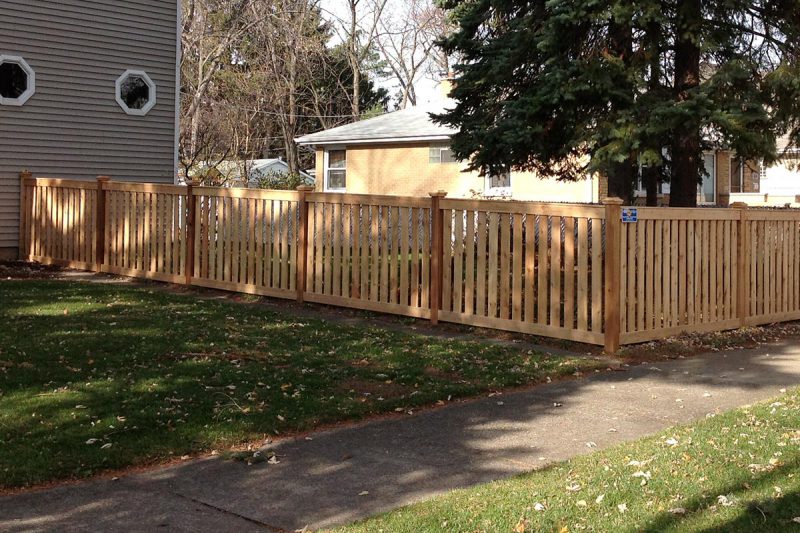
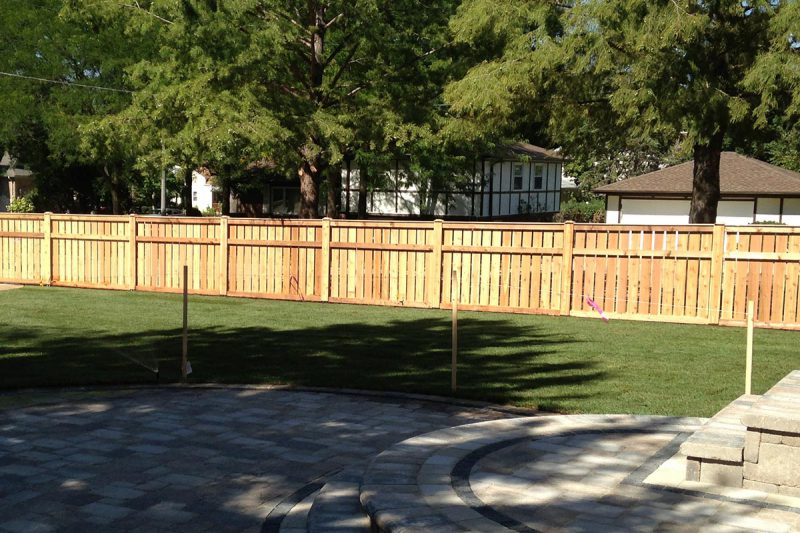
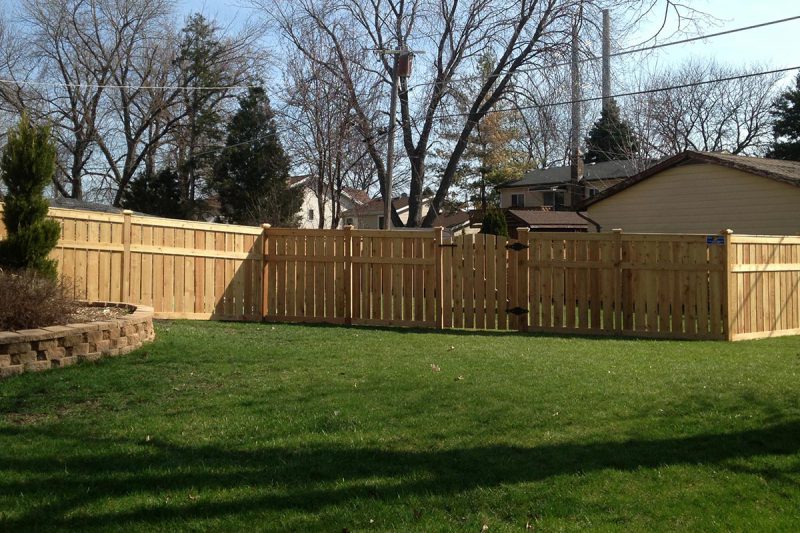
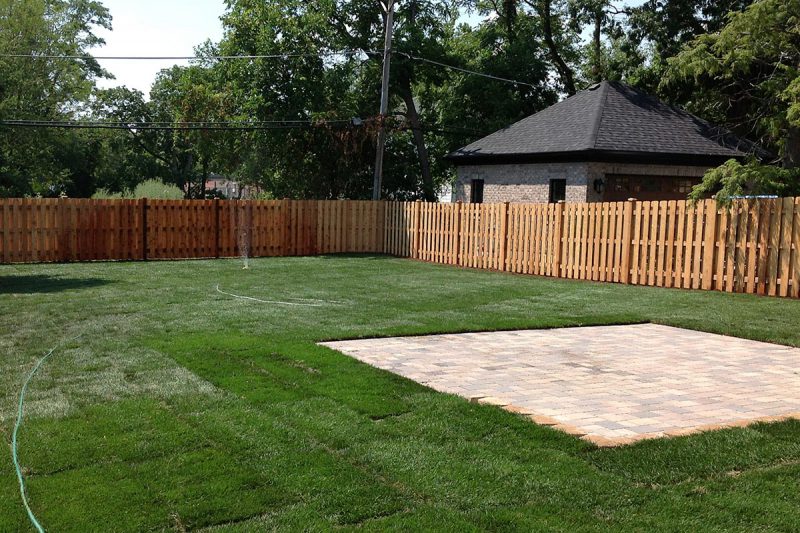
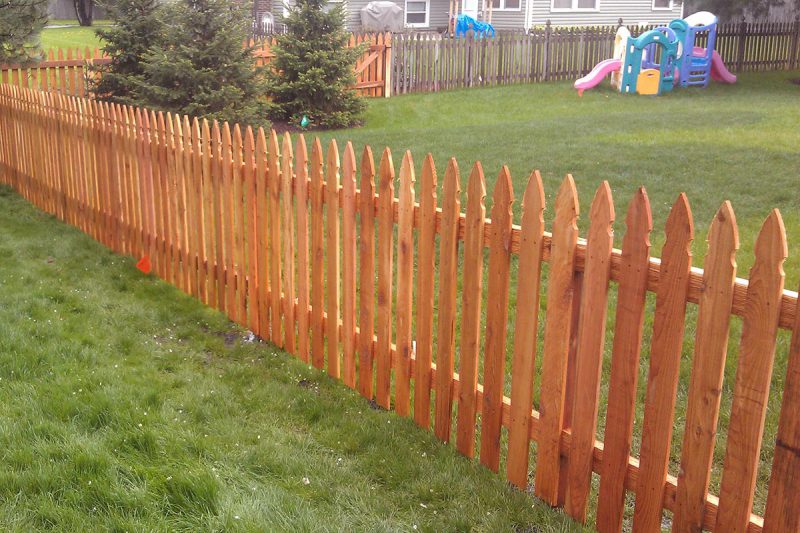
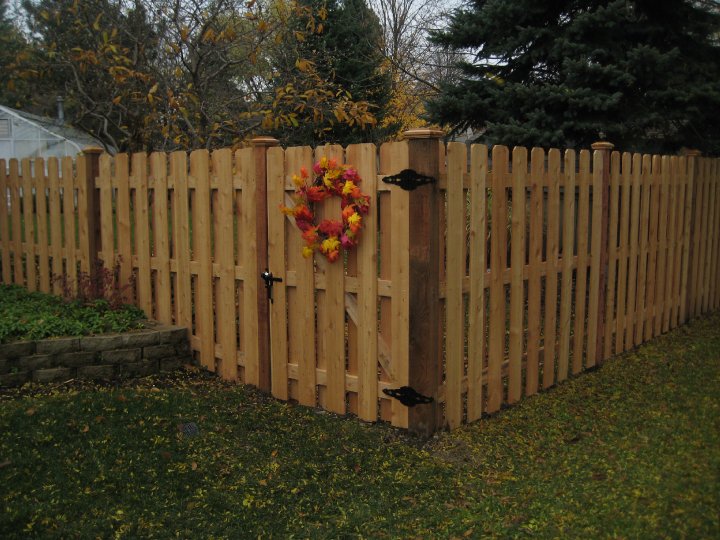
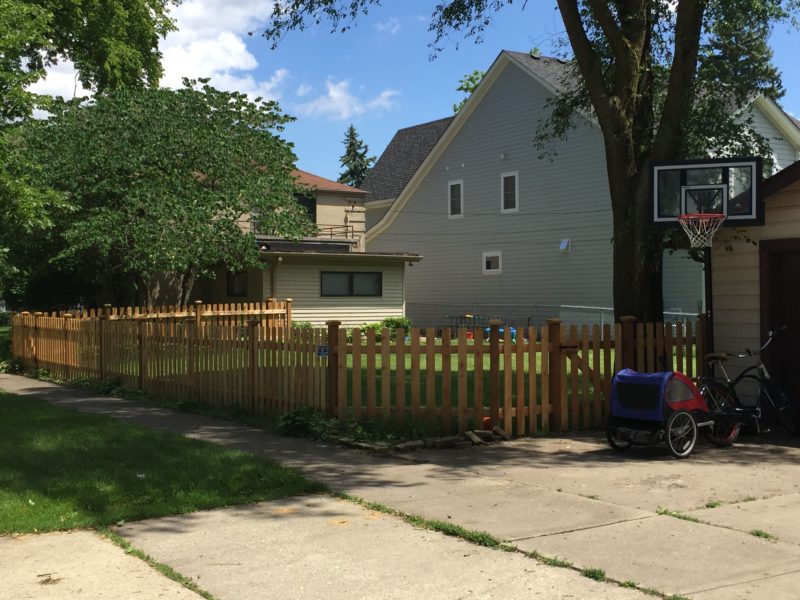
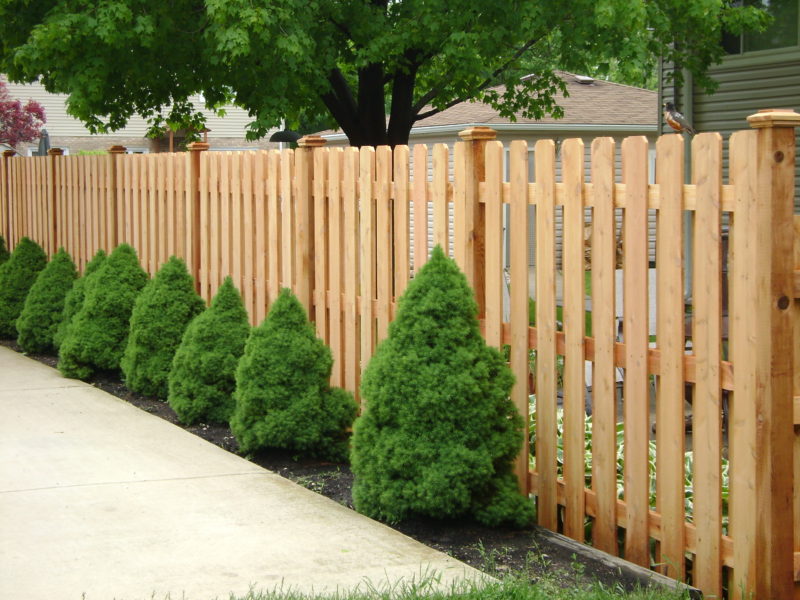
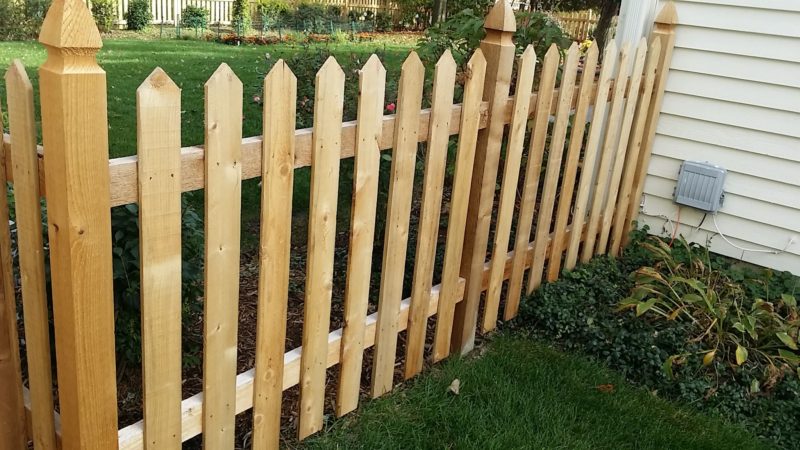
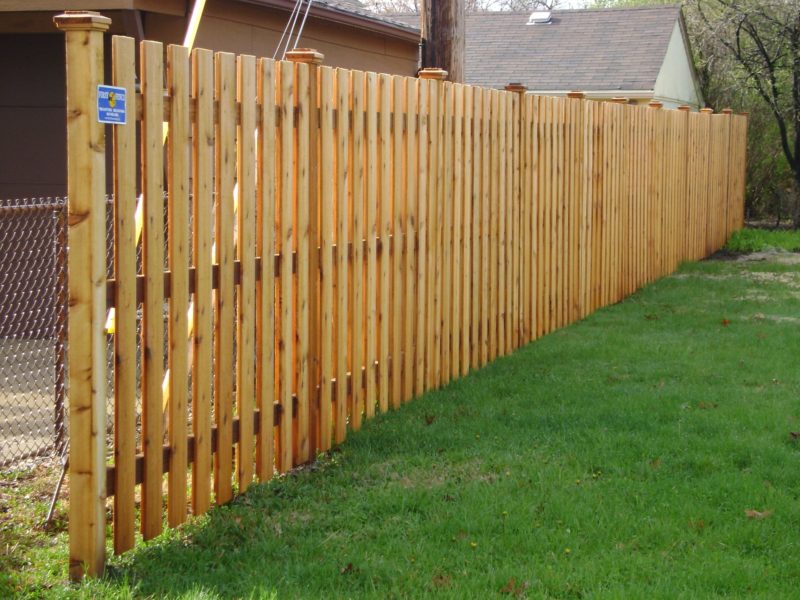
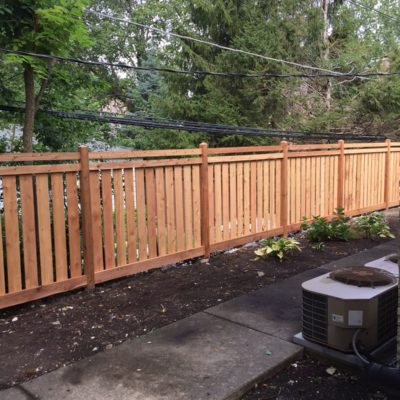
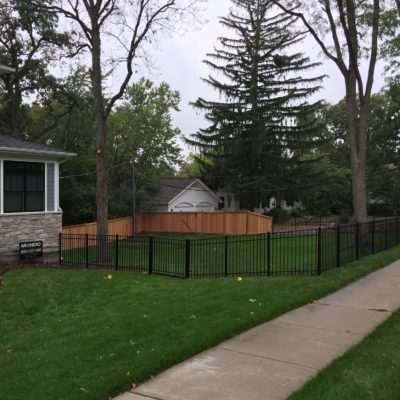
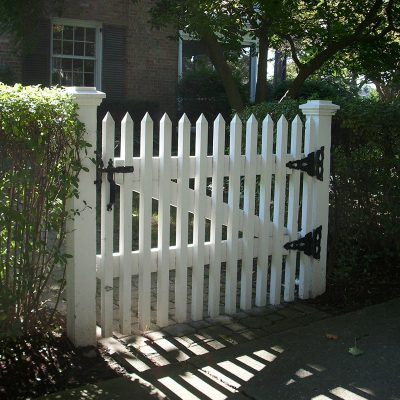
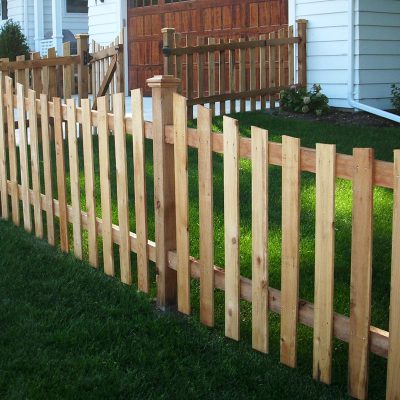
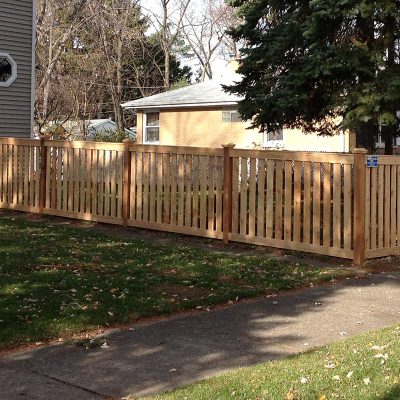
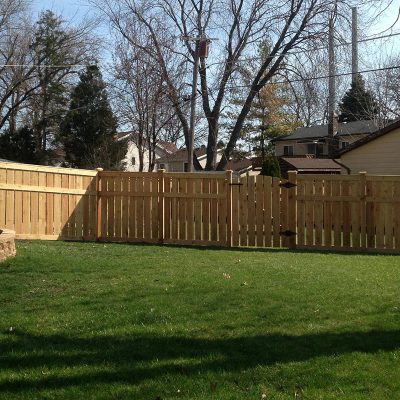
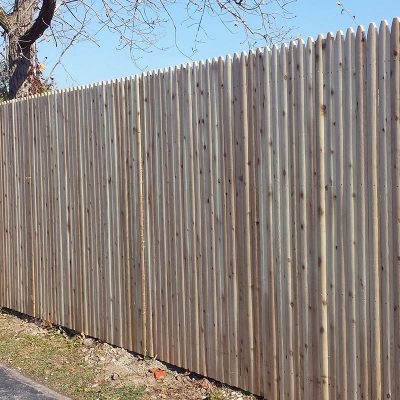
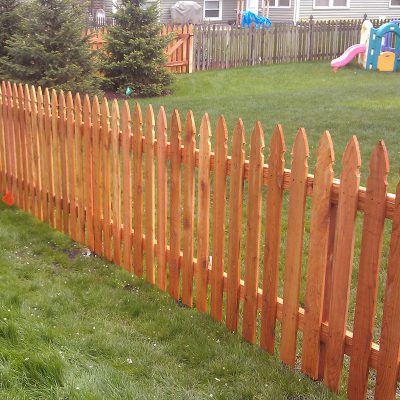
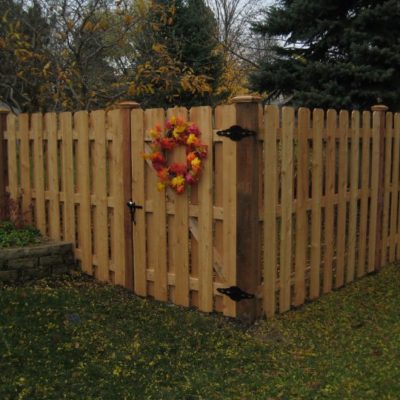
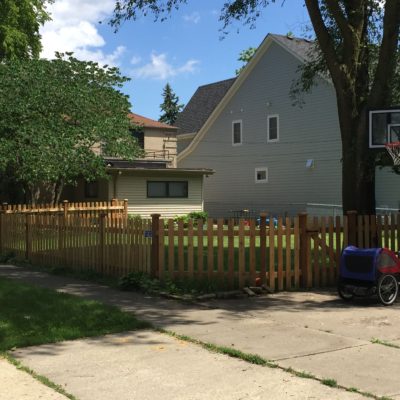
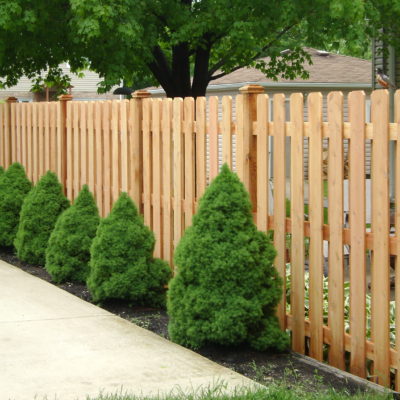
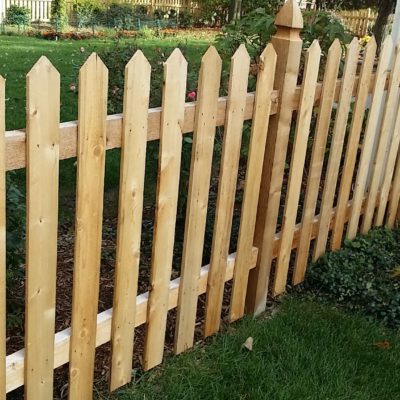
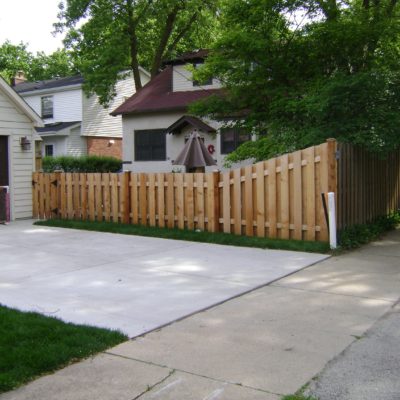
- Picket fencing: Spaced vertical pickets, usually 3 to 4 feet, with point-cut, dog-ear, or French Gothic tops. This is a front-yard and boundary fence, not a privacy fence: it defines the property, keeps a small dog in, and reads as charming rather than closed-off. Lower cost per foot than privacy styles because there’s less material, and one of the few wood styles permitted in a front yard.
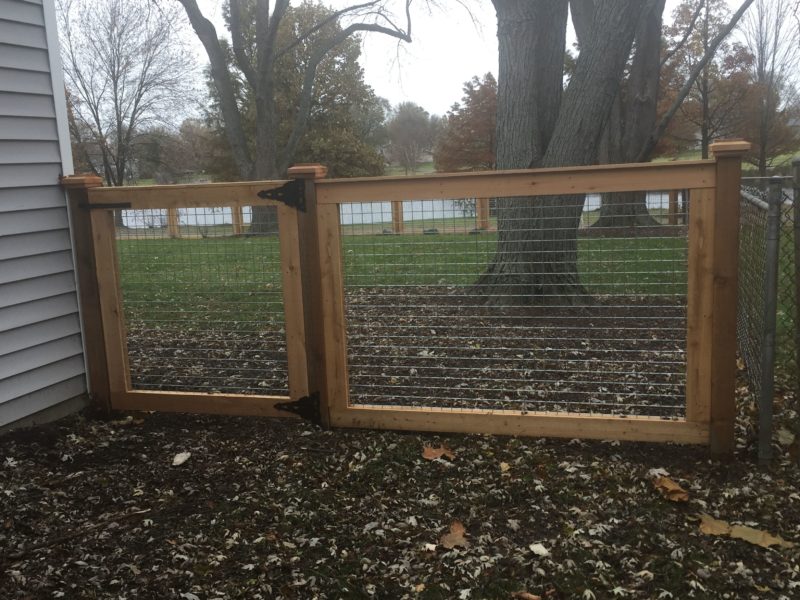
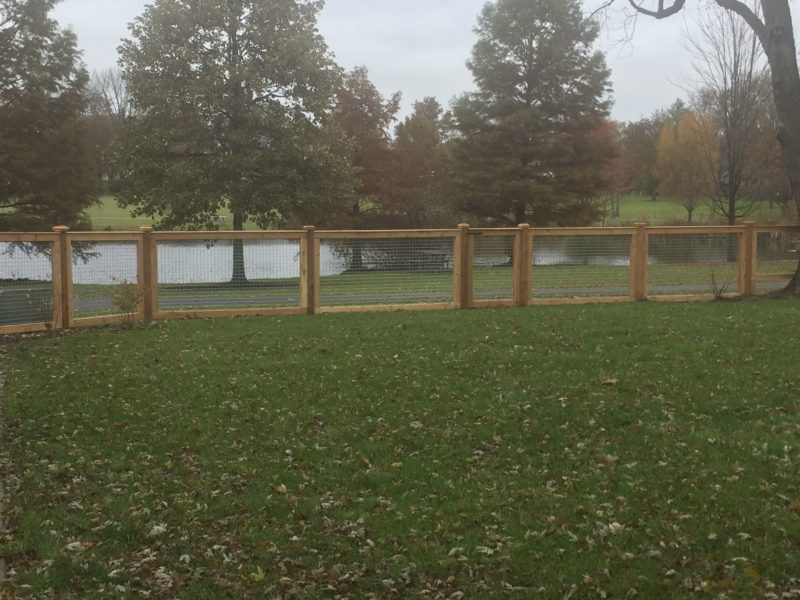
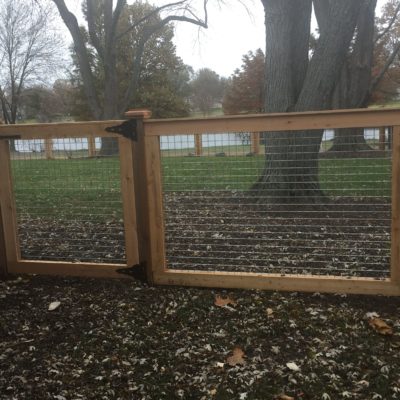
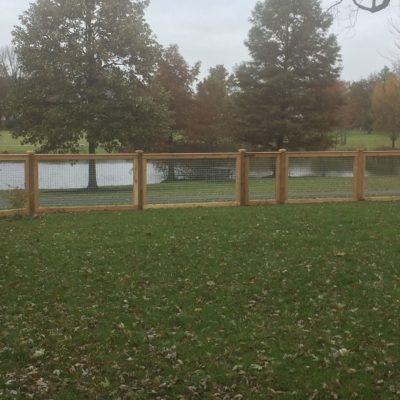
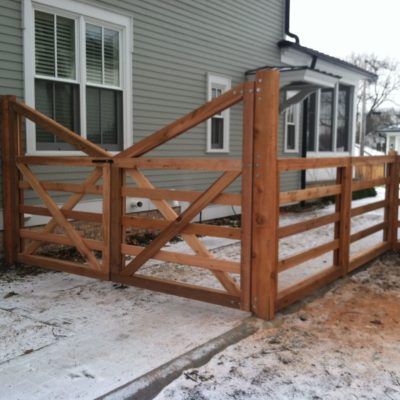
- Open rail and spaced styles: Post-and-rail and widely spaced traditional fencing marks a boundary and contains larger animals without blocking a view. It’s the most economical wood option per linear foot and suits deeper lots where a solid wall of cedar would feel wrong.
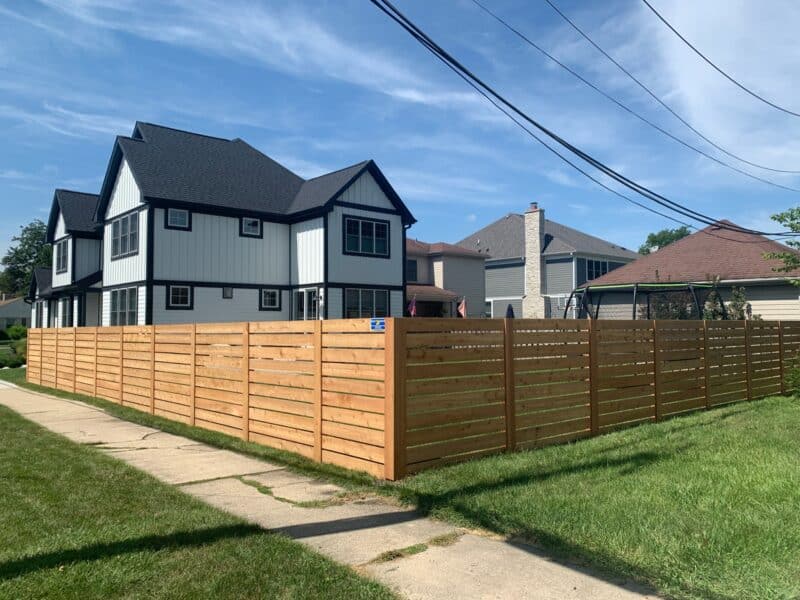
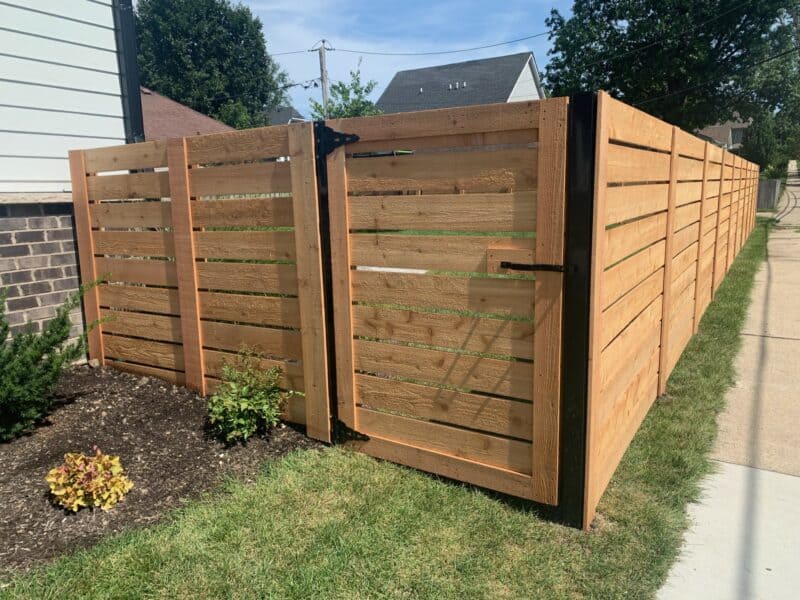
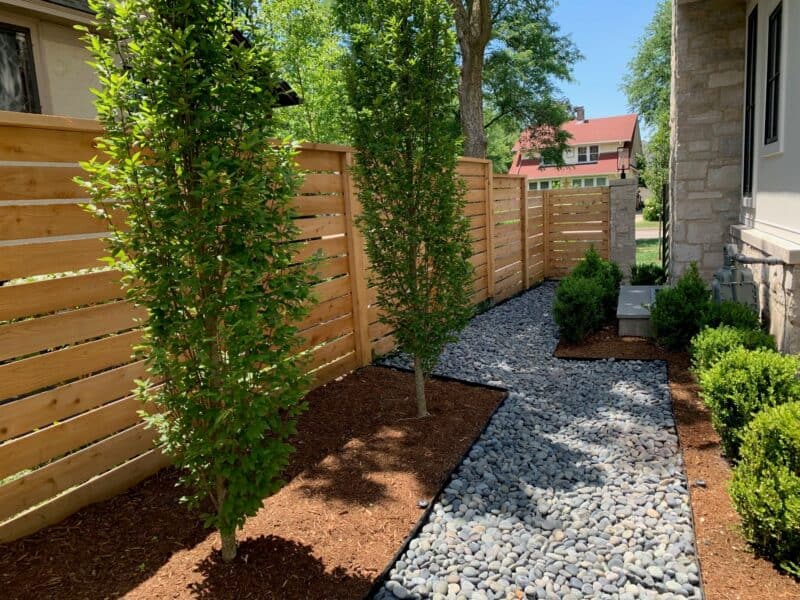
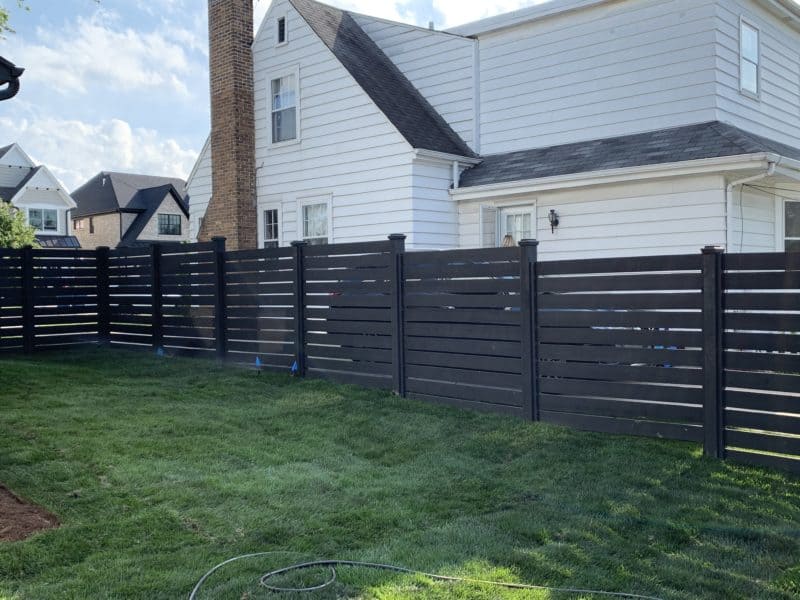
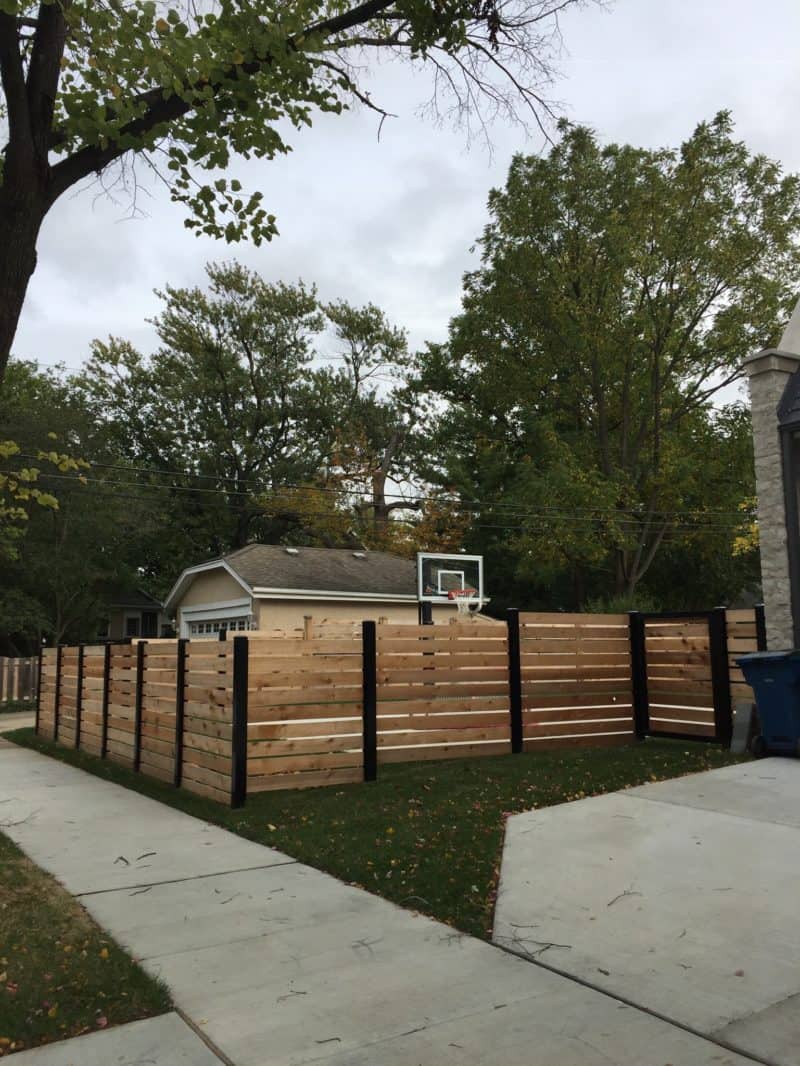
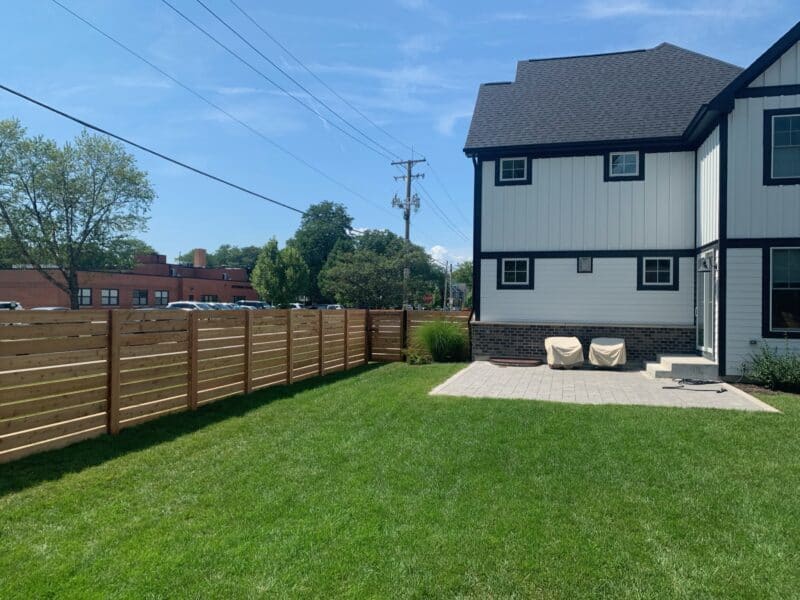
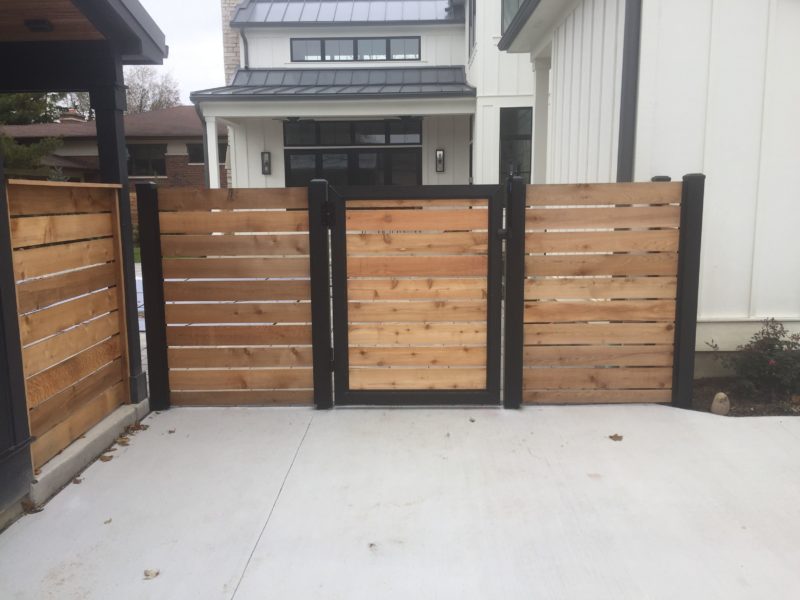
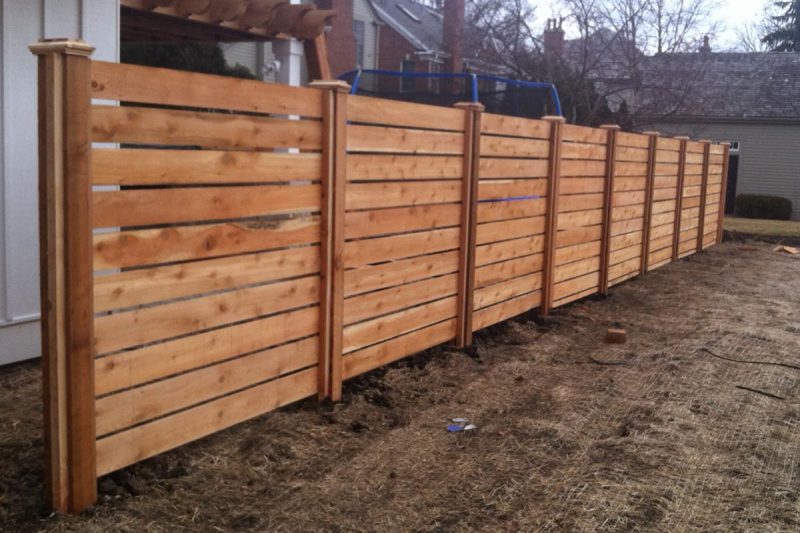
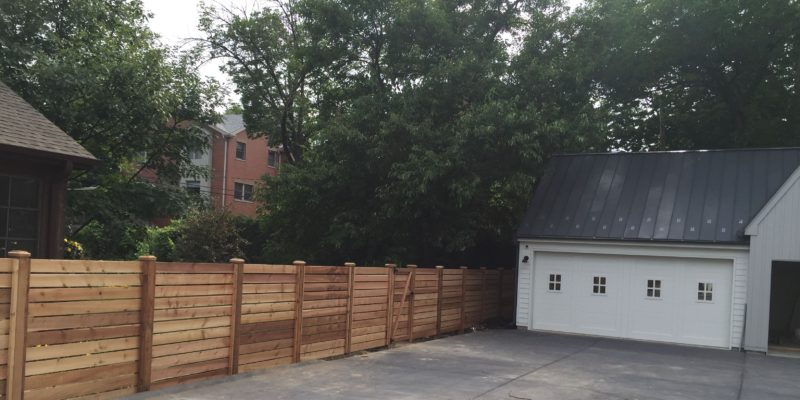
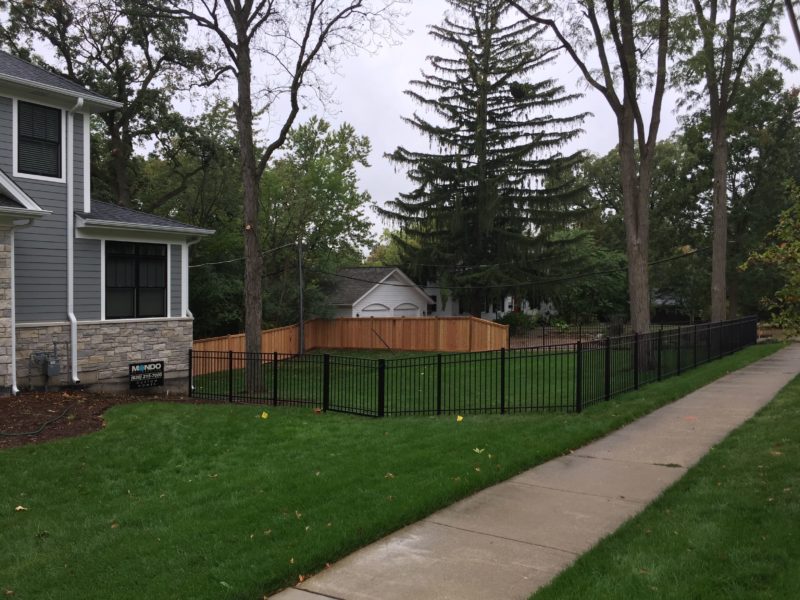
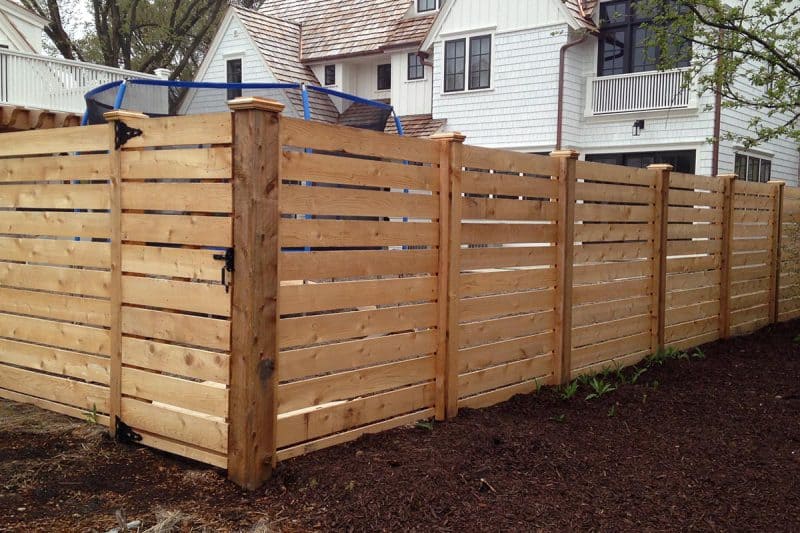
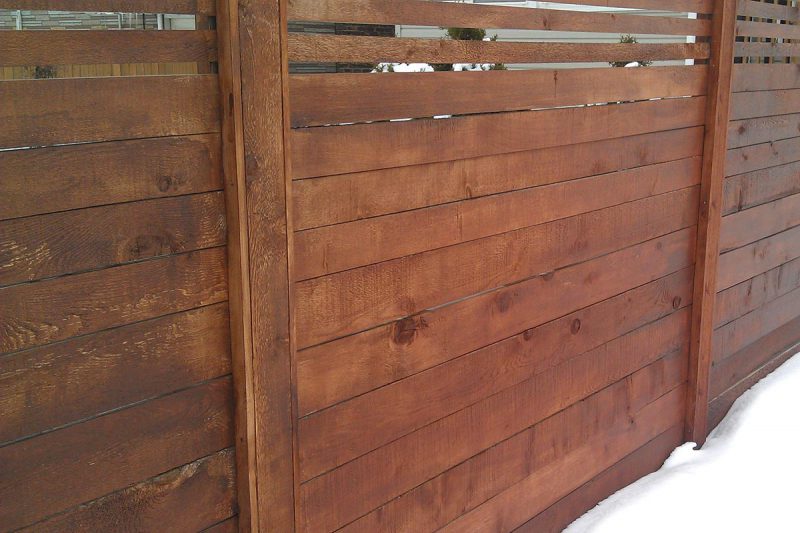
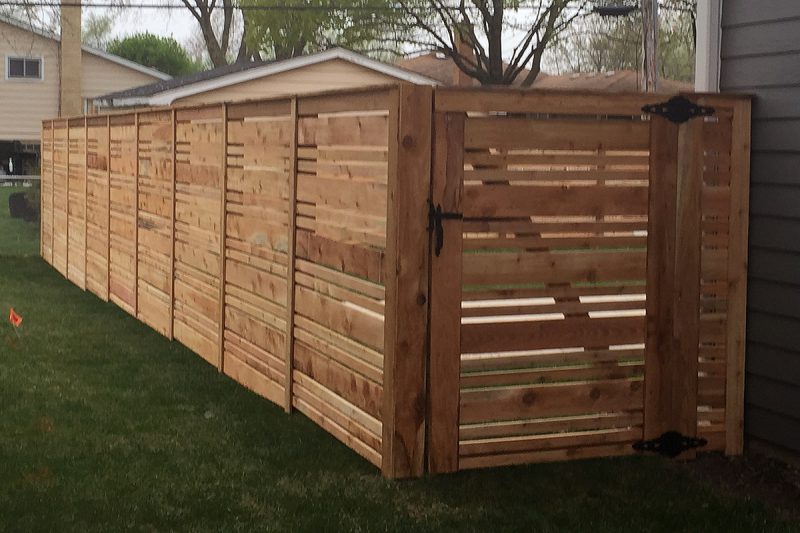
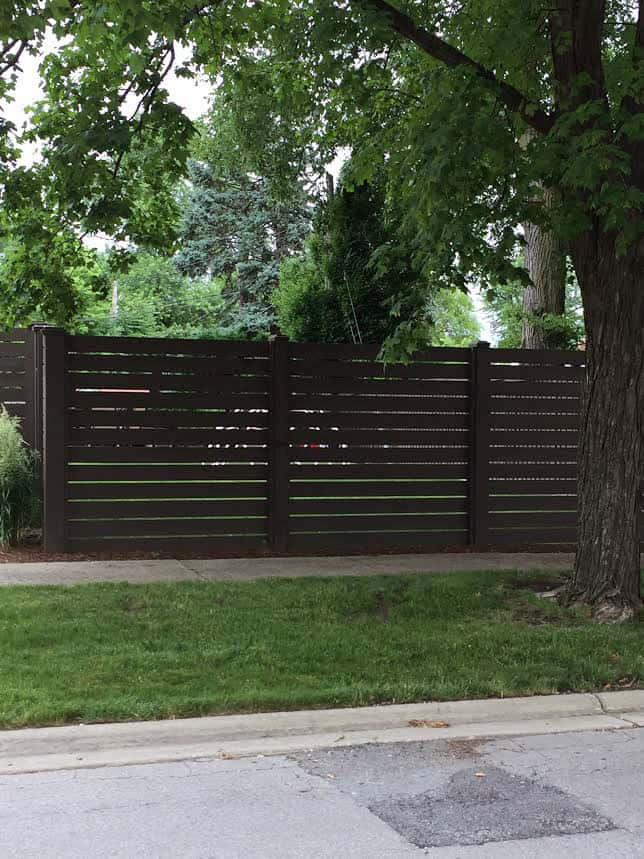
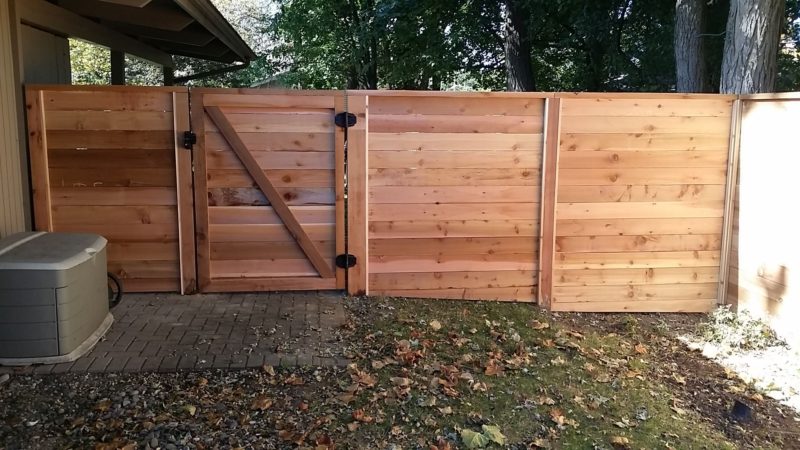
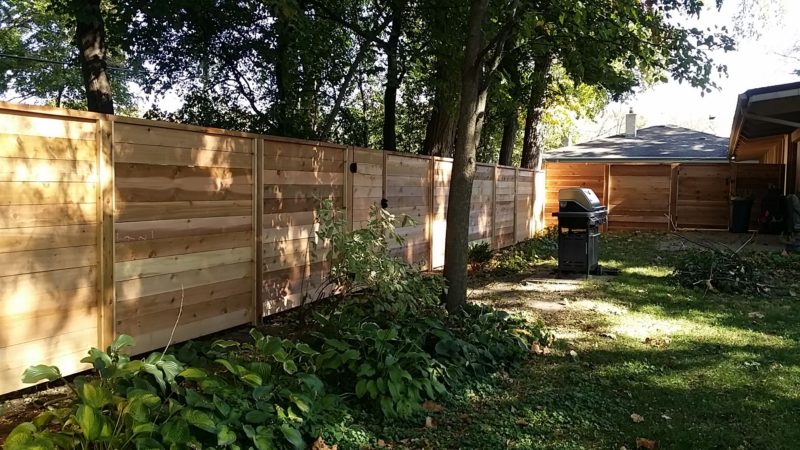
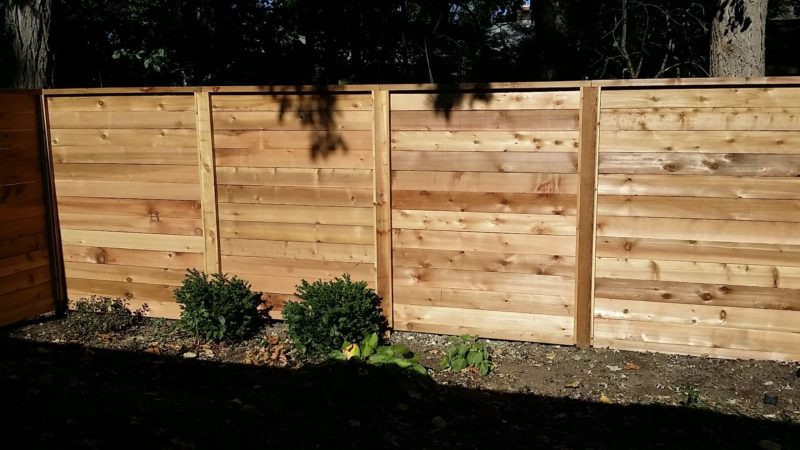
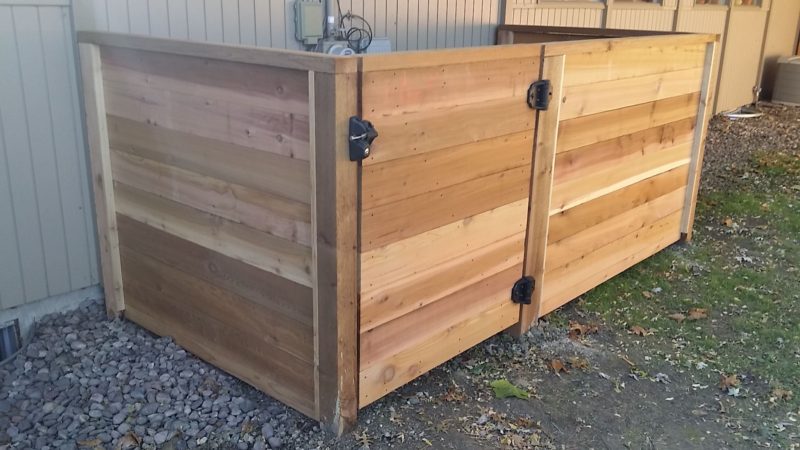
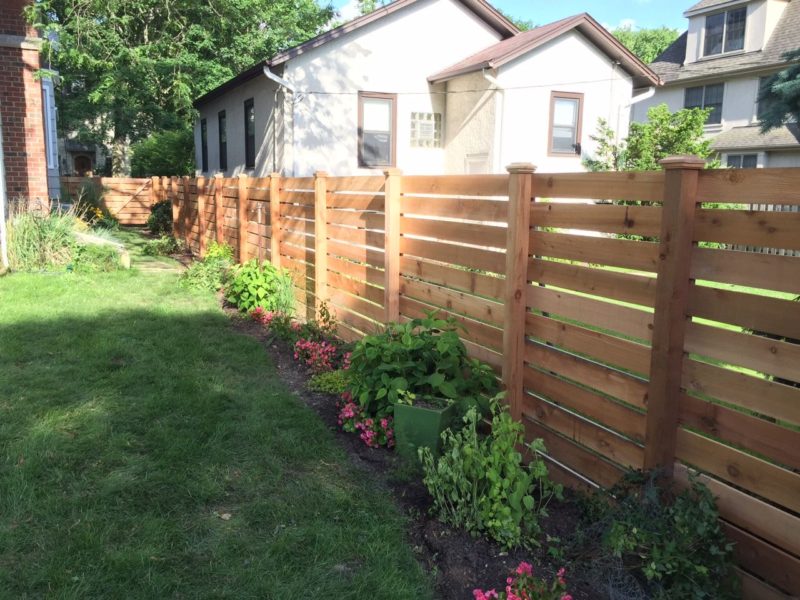
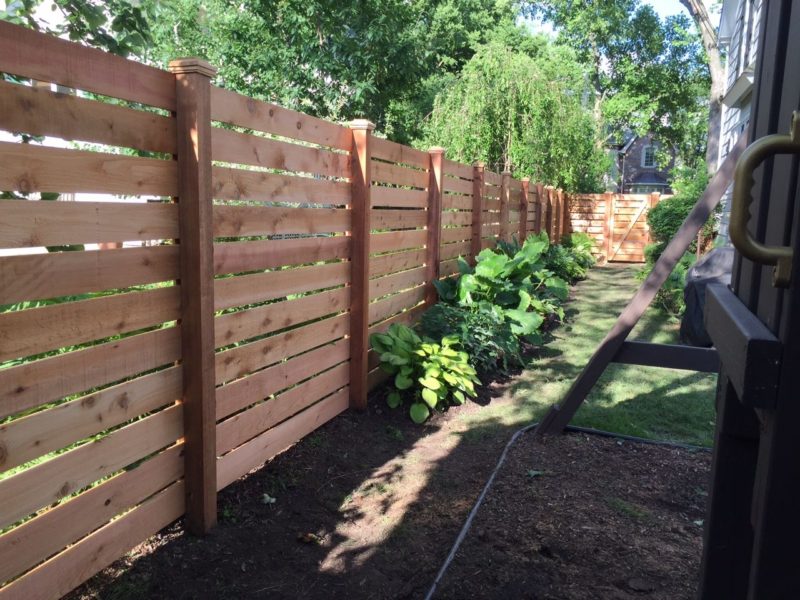
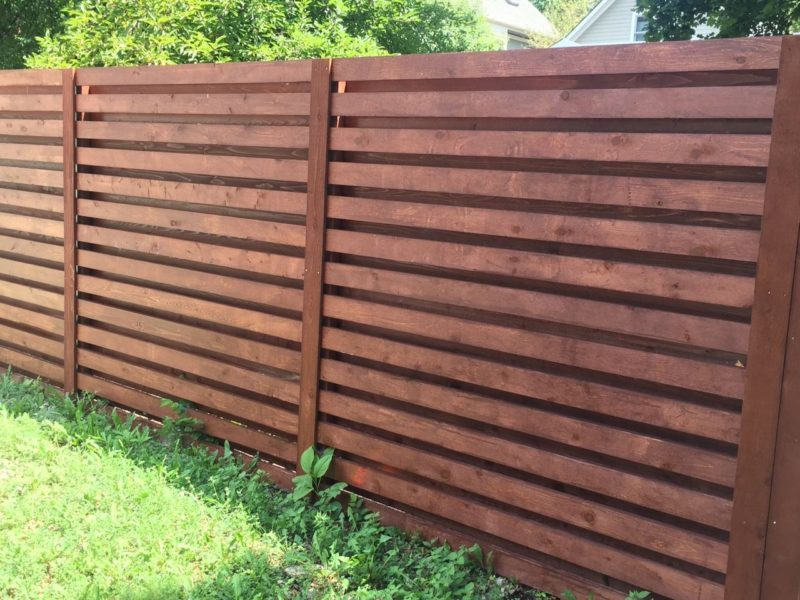
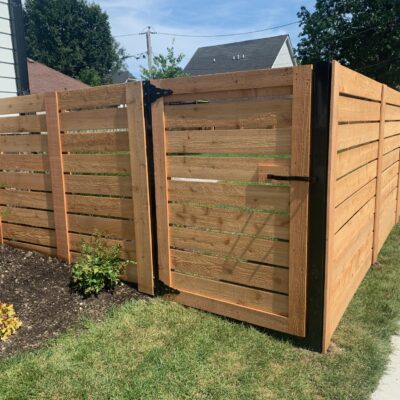
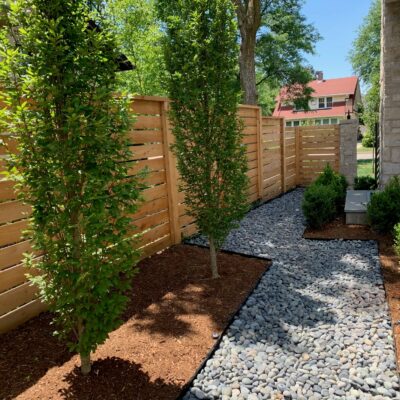
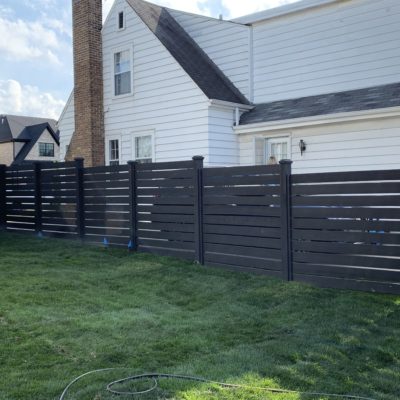
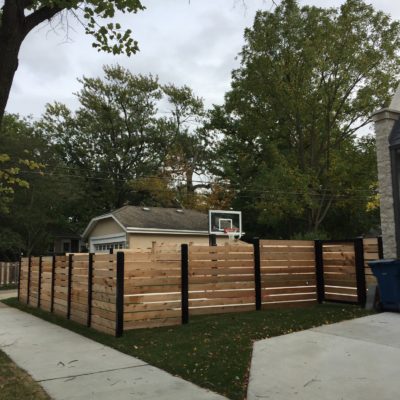
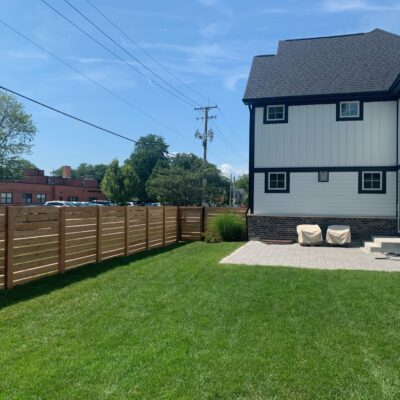
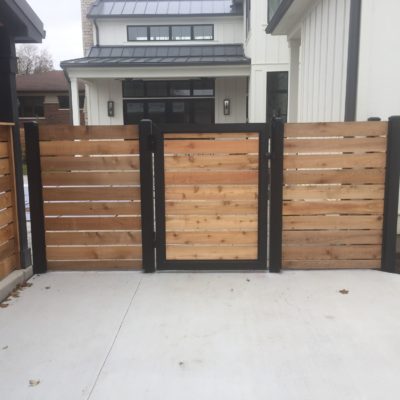
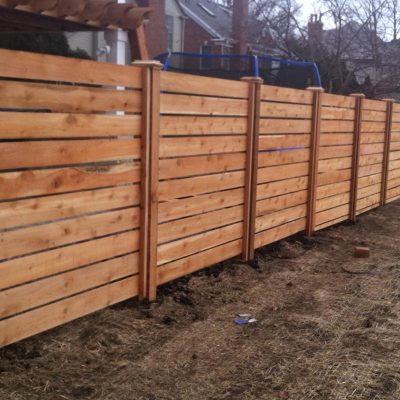
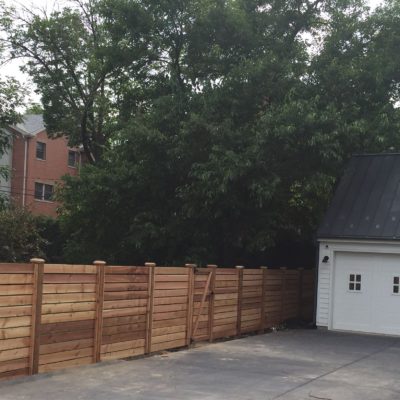
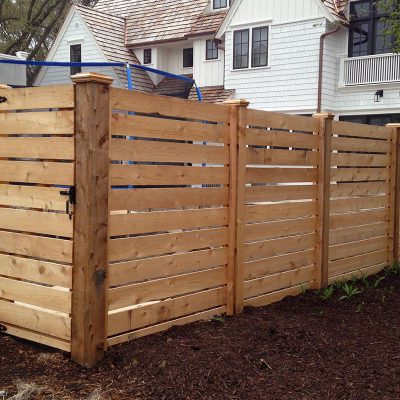
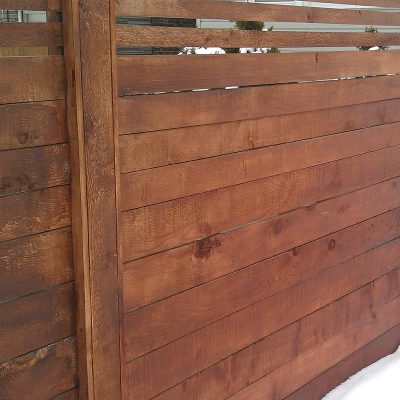
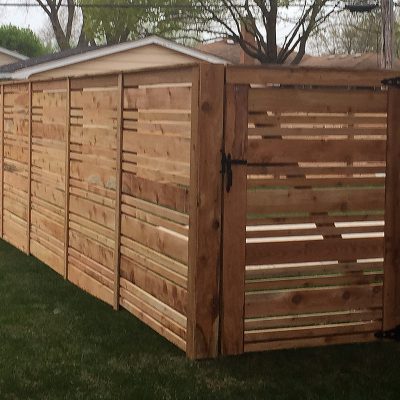
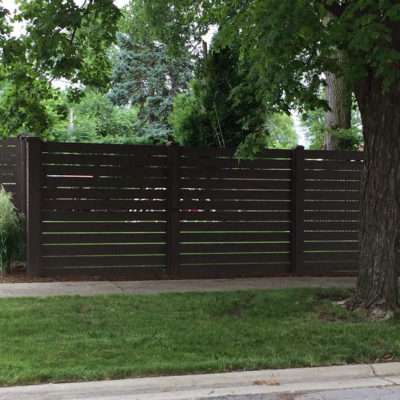
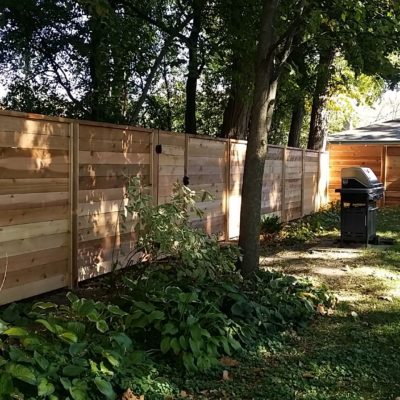
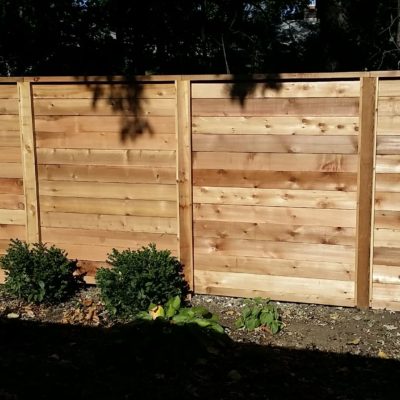
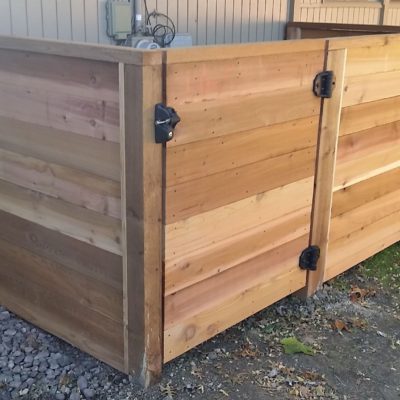
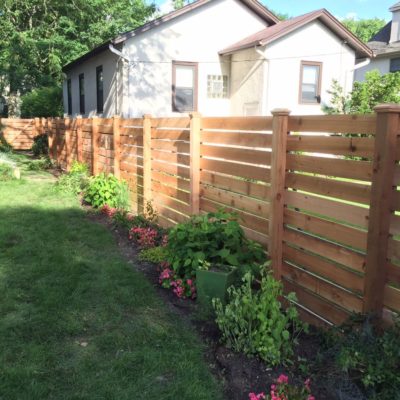
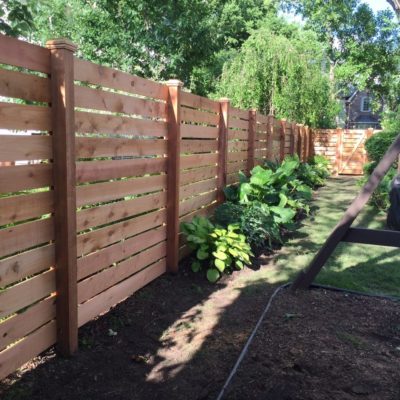
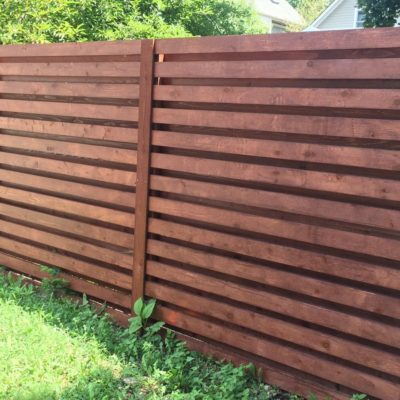
- Horizontal fencing: Boards run side to side instead of up and down, often with a black aluminum frame or black-stained finish. It’s the modern look, and it’s become one of our most popular requests for newer builds and renovated properties. Horizontal runs demand straighter stock, tighter post spacing, and more layout time, which puts it at the top of the wood price range.
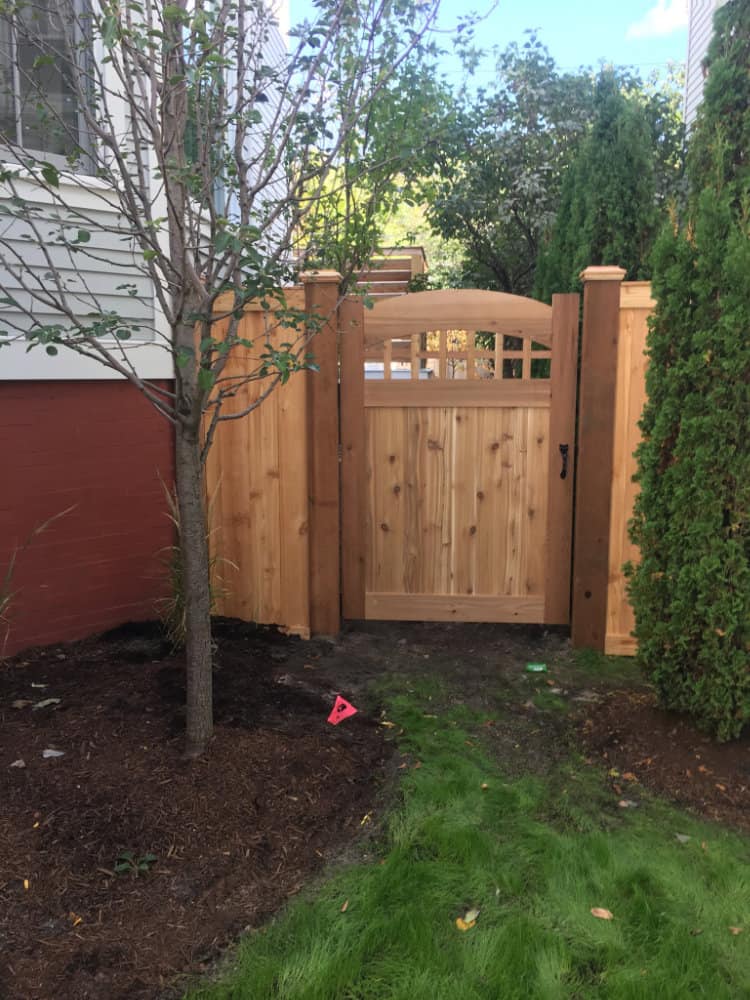
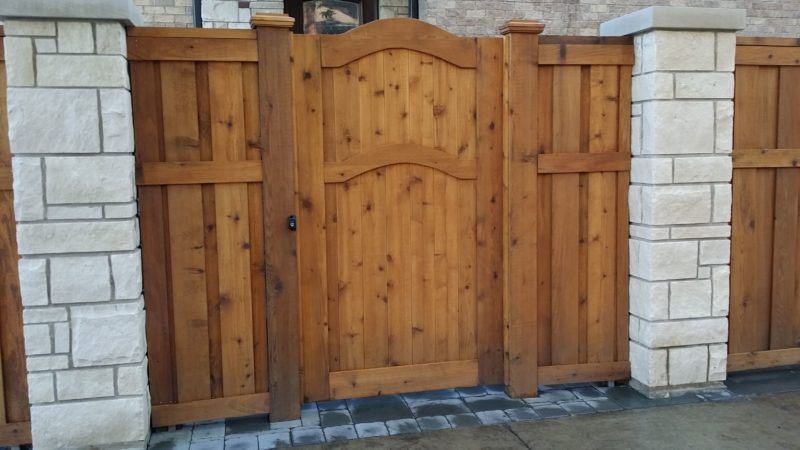
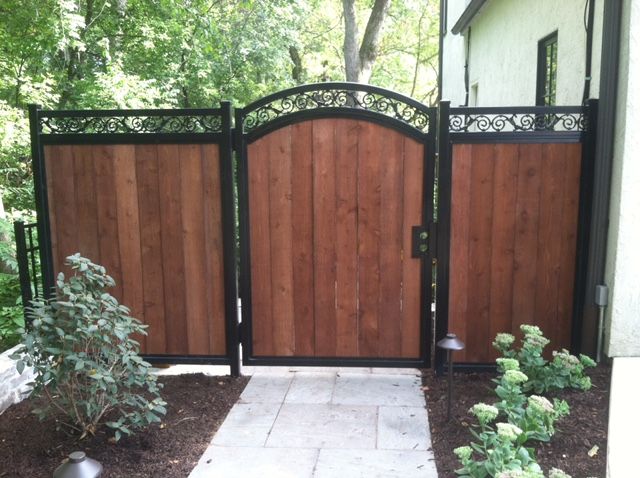
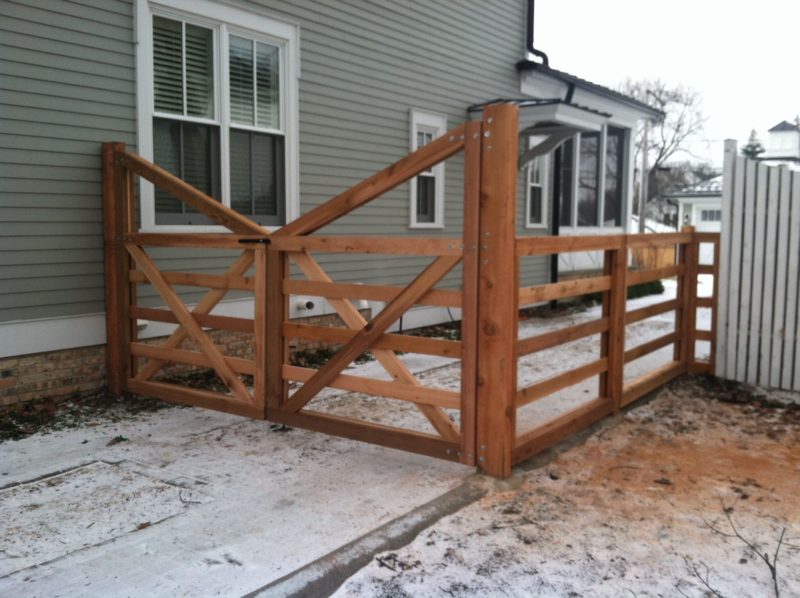
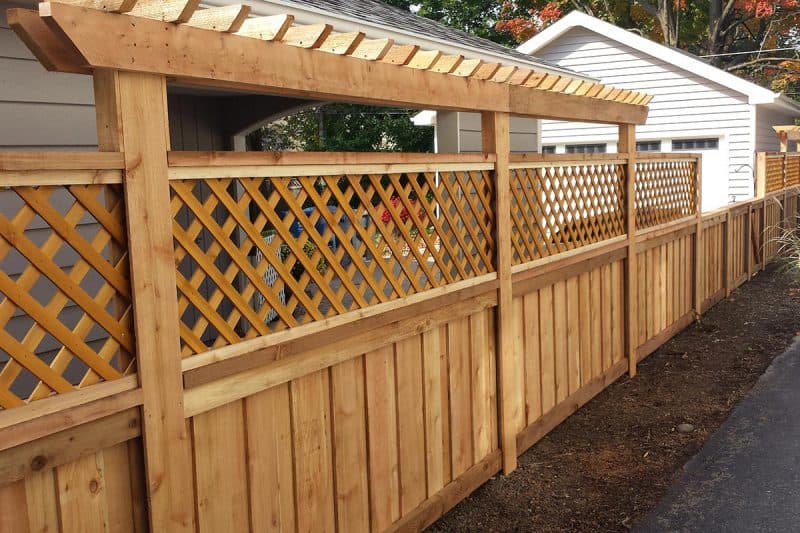
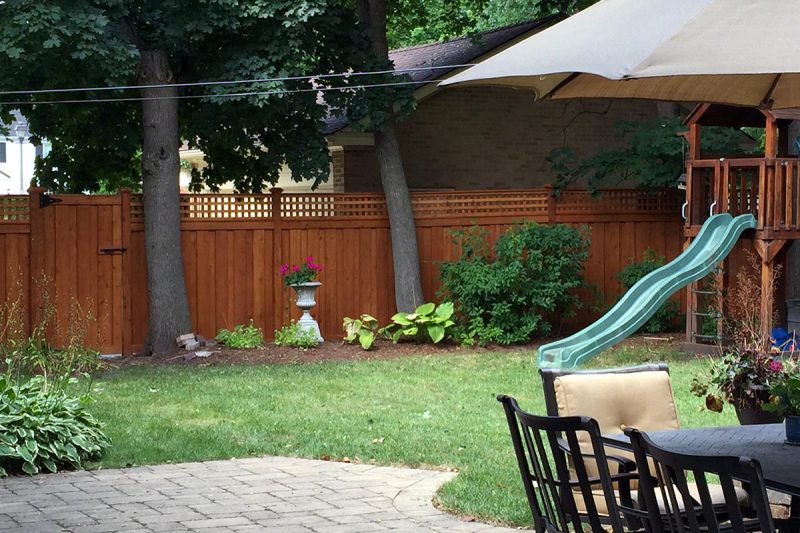
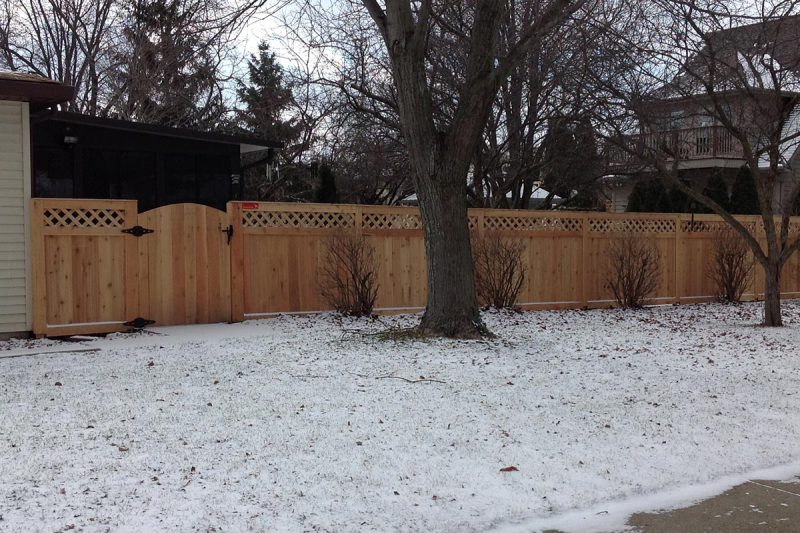
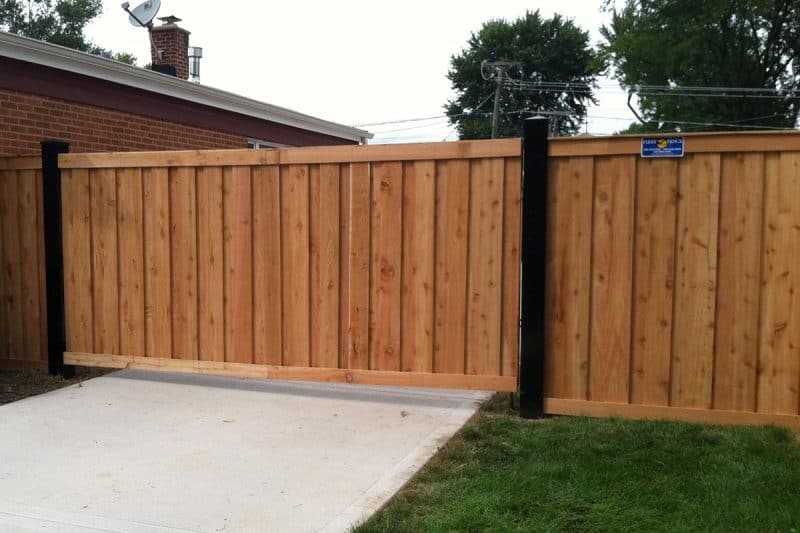
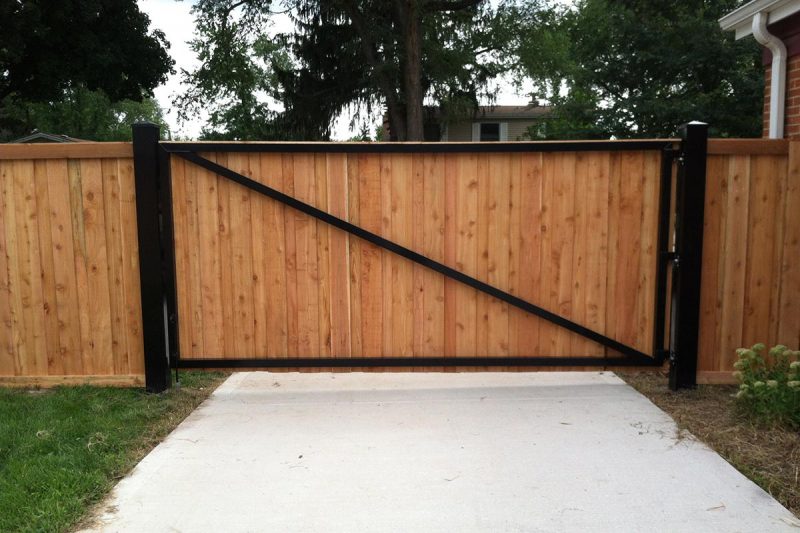
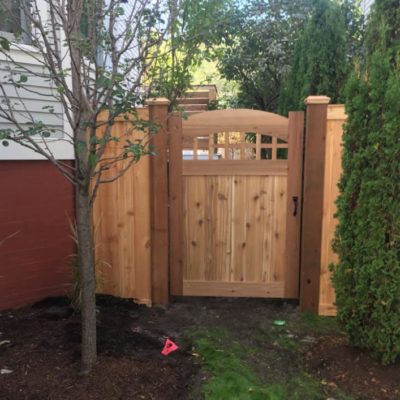
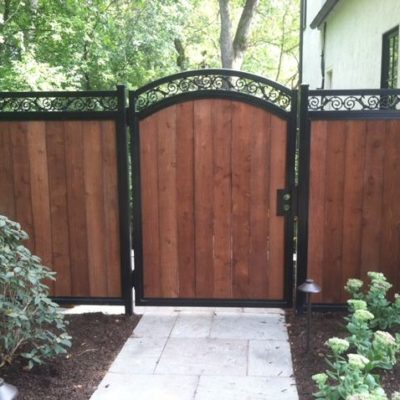
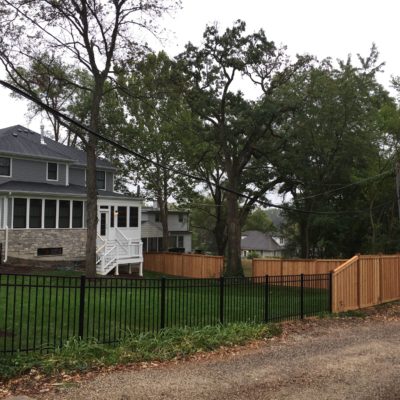
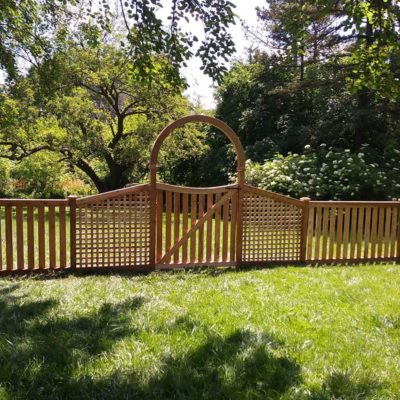
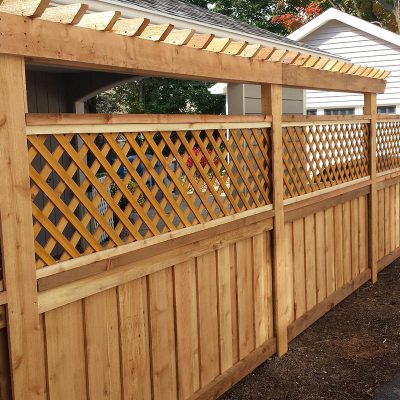
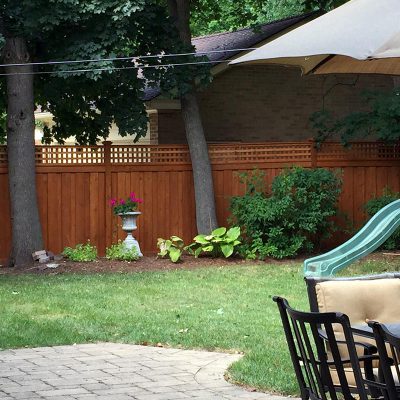
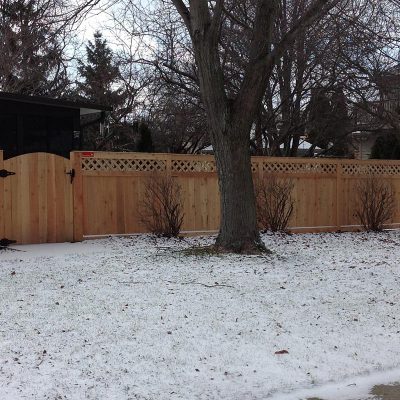
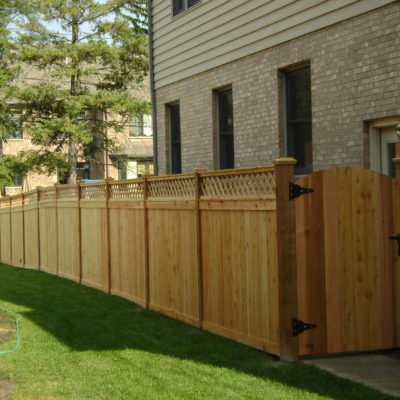
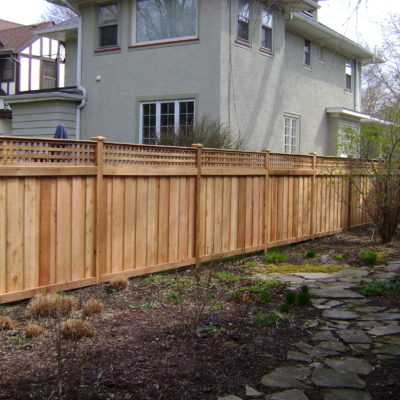
We also build lattice toppers, layered and stepped designs that follow a grade, wood-to-aluminum transitions, and fully custom gates — arched, oversized, or matched to an existing fence line.
Ready to talk it through? Call 708-547-7555 or request your free estimate.
Why We Build Wood Fences in Western Red Cedar
Western Red Cedar is the only type of wood fencing we install. Its natural oils and tannins help it resist moisture and insects without chemical treatment, making it well suited to wet spring conditions and ground contact. Cedar is also naturally dimensionally stable, so it is less likely to twist, cup, or warp and leave a fence line looking uneven after a few seasons. It takes stain well for homeowners who want a particular finish, while an untreated fence gradually weathers to the silver-gray color many people prefer. Proper installation and routine maintenance can significantly extend the life of a cedar fence in this climate.
Wood Fence Cost in Chicagoland: What Affects the Price
The cost of a wood fence depends on more than the number of feet you need. The following factors can all affect the final price:
- Linear footage: The single biggest factor. Corners, jogs, and short runs cost more per foot than long straight stretches.
- Height: A 6-foot privacy fence needs more material and deeper, wider post holes than a 4-foot picket.
- Style complexity: Solid board sits in the middle; board-on-board, horizontal, arched or scalloped tops, and lattice toppers all add lumber and labor.
- Gates: Every gate adds hardware, framing, and labor, and a double or driveway-width gate needs heavier posts and bracing. Gate count is often the difference between two estimates on the same yard.
- Site conditions: Mature tree roots, a rolling grade that needs a stepped or racked fence, existing fence and post removal, and dirt haul-away all factor in.
- Custom work: Matching an existing fence, integrating an aluminum frame, or building to a drawing takes design time.
Wood Fence Installation for Chicago Winters: Frost, Clay & Permits
Chicago winters are hard on fences, and good installation has to account for more than cold temperatures. Frost depth, heavy clay soil, freeze-thaw cycles, drainage, and local requirements all affect how a fence should be designed and installed if you want it to stay straight, secure, and functional for years.
The Frost Line
The design frost depth across the Chicago area is roughly 42 inches. When water in the soil freezes and expands, anything anchored above that depth can be pushed upward. Because frost heave is rarely uniform, the result can be a wavy fence line, gaps beneath the panels, and gates that no longer latch properly. Posts need to be set below the frost line in properly sized concrete footings. In many communities, that is not simply a recommendation but a code requirement. LaGrange and Villa Park, for example, requires fence post holes to extend at least 42 inches below grade, as does unincorporated Cook County.
Freeze-Thaw and Heavy Clay
Chicagoland’s dense, water-holding clay soil creates another challenge. Repeated freeze-thaw cycles put stress on shallow footings, exposed end grain, and especially gates. When a gate starts sagging or dragging, the problem is often with the post or footing rather than the hinges. We account for that when sizing and bracing gate posts and we offer D&D hardware to finish our gates.
Local Height and Permit Rules
Fence requirements vary by municipality, but most communities in our service area regulate fence height, placement, construction, and permits. Rear and side yards commonly allow fences up to 6 feet, while front yards are often limited to 3 or 4 feet and may require an open design. Elmhurst, for example, limits front-yard fences to 4 feet and requires open construction. Des Plaines allows up to 6 feet in rear and side yards but limits front and corner-side fences to 4 feet and requires fences to remain outside sight triangles near alleys and driveways. Oak Park adds design review requirements in historic districts. Many communities also require the finished side of the fence to face the street or neighboring property.
First Fence helps prepare the drawings, plat of survey, and material details your village may require. As the property owner, you must submit the application and obtain the permit in your own name.
Timing
We install wood fences nearly year-round, with frozen ground and cold-weather concrete pours being the main limitations rather than the calendar itself. Spring is our busiest season, so if you want your fence installed before summer, contacting us in late winter gives you a better chance of getting your preferred installation window. Late summer and fall are typically quieter, and fall can be an excellent time to install as the ground is still workable, and the fence has time to settle before winter arrives.
Our Wood Fence Installation Process in Chicagoland
A good fence installation starts long before the first post goes into the ground. We handle the process from initial layout through final adjustments, with careful attention to property lines, utilities, frost depth, grade, and the details that help a wood fence perform well for years.
- Estimate and layout: We walk the property with you, measure, talk through styles and gate placement, and put together a written estimate. Gate placement gets real attention on alley-loaded lots in the older suburbs, where the gate must clear a garbage cart and a garage apron.
- Property lines: You’ll need a plat of survey, the document that tells us and your village where the property line is. Most homeowners received one at closing; if not, your village may have a copy or a surveyor can produce one.
- Utility locates: We contact J.U.L.I.E. on your behalf to get gas, electric, and communication lines marked. You’ll want to flag your own irrigation lines, private electrical lines,and any gas line running to a grill, since those aren’t part of a public locate.
- Post holes and footings: Holes are dug below frost depth, and posts are set in concrete, plumbed and aligned. Digging generates a real volume of clay spoil; we’ll agree in advance whether it stays on site or gets hauled away.
- Framing and boards: Rails and boards go up, with the fence either stepped or racked to follow your grade, and gates hung and adjusted last.
- Settling before you stain: New cedar needs to dry and acclimate before it will take a finish, and stain needs mild, dry weather to cure.
Wood Fence Maintenance & Lifespan in Chicago Weather
Cedar is forgiving, but it isn’t maintenance-free. A quality stain or sealer every few years helps preserve the color and limit moisture absorption, with most homeowners in this climate settling into a two- to four-year cycle depending on sun exposure and the product used. Skip staining altogether and the fence won’t suddenly fail, cedar’s natural oils provide considerable protection, but it will gradually turn silver-gray, develop surface checking, and show faster wear on boards closest to the ground.
Beyond staining, maintenance is straightforward: keep soil and mulch away from the boards, prevent sprinklers from continually spraying the fence, and address loose posts or dragging gates before a small problem becomes a bigger one.
If you’d rather have a fence that requires virtually no maintenance, that’s worth discussing during your estimate. Vinyl and composite fencing are both low-maintenance alternatives.
Get a Free Estimate From a Chicagoland Wood Fence Company
Whether you’re replacing a failing fence, adding privacy to the backyard, or enclosing a property for the first time, the right fence starts with the right installation. First Fence Company has been building cedar fences and custom wood gates across Chicagoland since 1989, with designs and installation methods suited to local soil, weather, and municipal requirements.
Get a free estimate on your wood fence. Call 708-547-7555 or tell us about your project and we’ll come out, measure, and give you a real number.

Wood Fencing Services Throughout Chicagoland
First Fence Company provides wood fence installation for residential, commercial, and community properties throughout Chicagoland. With a variety of wood styles and configurations available, wood fencing can complement traditional and contemporary properties while providing options for privacy, property boundaries, and curb appeal. Our team serves customers throughout Cook and DuPage counties.
Explore our local service areas to find fencing services available in your community:
- Hinsdale Fence Company
- Berwyn Fencing Services
- Fence Contractors in Oak Park
- Elmhurst Fence Services
- Naperville Fence Company
- Bellwood Fence Installation
- Aluminum Fence Company Clarendon Hills
- Fencing Services Des Plaines
- Downers Grove Fence Contractors
- Westchester Fencing Services
- Lombard Fence Installation
- Aluminum Fencing Glen Ellyn
Compare Wood Fencing With Other Materials
Wood fencing offers flexibility in style, height, and design, making it suitable for everything from backyard privacy fences to property boundaries and decorative applications. Other materials may be better suited to properties with different maintenance, visibility, longevity, or design preferences.
Compare vinyl and PVC fencing, aluminum fencing, chain link fencing, iron fencing, and ornamental steel fencing to find a fencing material that fits your property’s needs.
Wood Fencing FAQs
Do you install pressure-treated pine, or only cedar?
We build our wood fences in Western Red Cedar. If pressure-treated pine is something you’ve been considering, that’s a fair question — we’re happy to talk it through.
How deep do fence posts need to go in the Chicago area?
The design frost depth around here is roughly 42 inches, and posts need to be set below it in concrete so frost heave can’t lift them. Some local codes state that depth explicitly; LaGrange, Villa Park and unincorporated Cook County all call for 42-inch post holes.
Do I need a permit for a wood fence in my village?
Almost certainly. Nearly every community we serve requires a permit for a new or replacement fence, along with a plat of survey showing where the fence will go. First Fence helps prepare the drawings, plat of survey, and material details your village will ask for. As the property owner, you submit the application and obtain the permit in your own name.
How tall can my wood fence be?
Rear and side yards commonly allow up to 6 feet across our service area, while front-yard fences are usually held to around 3 to 4 feet and often have to be open in design, like a picket. The specifics vary by village and by where the fence sits on your lot, so we confirm the current requirements with you at the estimate.
How often should I restain a wood fence?
Most homeowners here restain every two to four years, depending on sun exposure and the product used. New cedar also needs time to dry and acclimate before its first finish.
Which wood fence style gives the most privacy?
Solid board privacy fencing screens the most, since there are no gaps at all. Board-on-board (shadowbox) comes very close, allows some airflow, and looks finished from both sides which matters when the fence faces a neighbor’s yard.
Can you build a custom wood gate or match my existing fence?
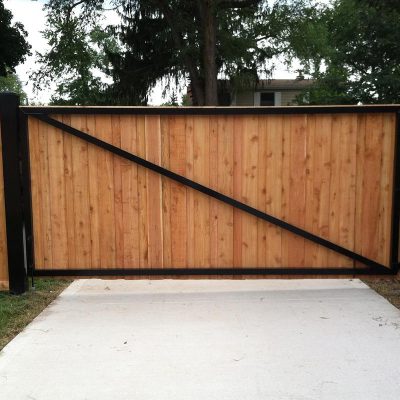
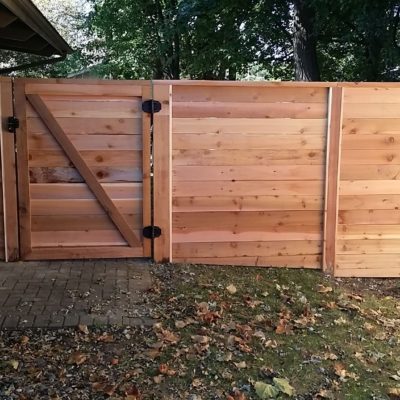
Yes. Custom gates are some of our favorite work, arched tops, driveway-width double gates, gates framed in aluminum for a wood fence that won’t sag. We also match existing fence lines when you’re replacing a section or extending a run.
What does a wood fence cost?
It depends on linear footage, height, style, gate count, and site conditions like tree roots, grade, and removal of an old fence. That’s why we measure in person instead of quoting a per-foot price, an estimate built from a real walkthrough is a number you can actually plan around.
Featured Projects Featuring Wooden Fences
Materials We Trust

Modern composite fencing that is durable, pest resistant, waterproof, and highly customizable.

We rely on the most trusted name in architectural metal fencing.

Bufftech vinyl fence is made with carefully selected ingredients designed to increase durability and long-term performance.

Long-lasting PVC and vinyl fences in an array of elegant styles.

D&D sets the standard for secure, easy-to-use fence hardware.

Economy Iron designs, and builds ornamental iron to last a lifetime.

Our metals and coatings are chosen first for their endurance.

Our high-performance EverGuard® vinyl fence systems are recognized for their long-lasting durability and beautiful design.

Premium materials for industrial, commercial, and high-security installations.

Enjoy the look of wrought iron fencing without the cost or upkeep.

Manufacturing your vinyl fence materials since 2004.

For lightweight aluminum fencing with the look of iron, choose Ultra.

Our easy-to-build railing kits provide safety and high quality at a more reasonable price.