

Quick answer:
For most dogs, a 6 foot solid vinyl or wood privacy fence is the safest, easiest bet. It blocks the view of passing dogs and cars that get reactive dogs worked up, and it’s tall and smooth enough to stop most jumpers and climbers. Determined diggers and small dogs need tight picket spacing with no gap near the ground. Your dog’s size, energy level, and escape habits, plus your yard’s layout, your budget, and your village’s permit rules, will point you to the right choice. Below, we walk through every major fence type by safety, cost, and upkeep so you can match one to your dog.
Your dog’s safety shouldn’t come with compromises, and neither should your backyard. At First Fence Company, choosing the right fence has never been just about containment. It’s about giving your dog room to play, relax, and explore without putting themselves at risk, and giving you one less thing to worry about.
The right fence does more than keep your dog in the yard. It can cut down on barking, stop the damage that comes from repeated escape attempts, and make your property look better while it’s at it.
Every dog is different. A laid back senior Lab and a fence climbing Husky puppy don’t need the same setup, and the wrong fence can lead to bad habits, frequent repairs, or a genuine safety risk. The right fence blends strength, height, safe spacing, and a look you actually want in your backyard.
This guide walks through how to match a fence to your dog’s habits, your yard, and your own preferences, so you can make a call you’ll be happy with for years.
Dog Fence Comparison: Safety, Cost and Maintenance
| Fence Type | Best For | Escape Resistance | Maintenance |
|---|---|---|---|
| Wood Privacy | Reactive dogs, chewers, classic curb appeal | High at 6 ft with sealed gaps | Restain or reseal every 2 to 3 years |
| Vinyl Privacy | Diggers, muddy yards, low-maintenance owners | High, smooth surface resists climbing | Hose off occasionally; no sealing needed |
| Chain Link | Budget-conscious owners, calm dogs, large yards | Moderate, climbable by agile dogs | Check yearly for sag and rust |
| Aluminum or Ornamental Steel | Strong or large dogs, upscale look | High for strength; verify picket spacing for small dogs | Rinse and inspect welds yearly |
| Invisible or Electronic | HOA-restricted yards, well-trained dogs | Low, no physical barrier | Monthly collar and battery checks |
| Portable or Temporary | Renters, puppies, indoor use | Low, easily tipped by larger dogs | Wipe down; replace as needed |
*Typical costs vary by region, materials, installation requirements, and fence height.
What Should You Consider Before Choosing Dog Fencing?
Picking the right fence starts with your dog and your property, not the other way around.
Your Dog’s Size and Behavior
A small dog like a Dachshund usually needs tight picket spacing and reinforcement along the bottom to stop digging. A bigger, more athletic dog, like a Labrador Retriever, German Shepherd, or Husky, can clear a 4 foot fence without much effort.
Beyond size, pay attention to how your dog actually behaves. Does he jump, climb, dig, or chew? Does he get worked up by people, cars, or other dogs, push on gates, or squeeze through gaps you didn’t think were big enough? The fence that actually works is the one built around your dog’s real habits, not just his breed or size.
Yard Dimensions and Layout
The size and shape of your yard play a big role in selecting dog fencing. A large backyard might benefit from a vinyl or chain link fence that installs quickly and efficiently. Narrow side yards or sloped terrain may need custom measurements and angled posts. Corner lots may also require visibility panels or compliance with traffic sightline rules.
Local Laws and Village Permit Requirements
Chicago area homeowners face their own set of rules on top of general zoning codes. Most Chicagoland villages require a fence permit before installation, and many limit front yard fencing, require neutral colors, or set minimum spacing between pickets. Illinois’s frost line typically runs deeper than warmer climates, which is why post footings here need to be set well below grade for the fence to stay solid through freeze and thaw cycles each winter. Before buying, check your local zoning ordinance and pull the required village permit.
Maintenance Preferences
Some homeowners don’t mind occasional painting or staining. Others want a low maintenance solution they won’t think about for a decade. Your tolerance for ongoing upkeep should steer your decision as much as looks or cost.
Aesthetic Preferences
Want something classic and elegant? Wood and ornamental metal may suit your taste. Looking for modern and clean? Vinyl might be the way to go. If you want your pet fence to blend into the background, invisible fencing could be the option for you.
Types of Dog Fences
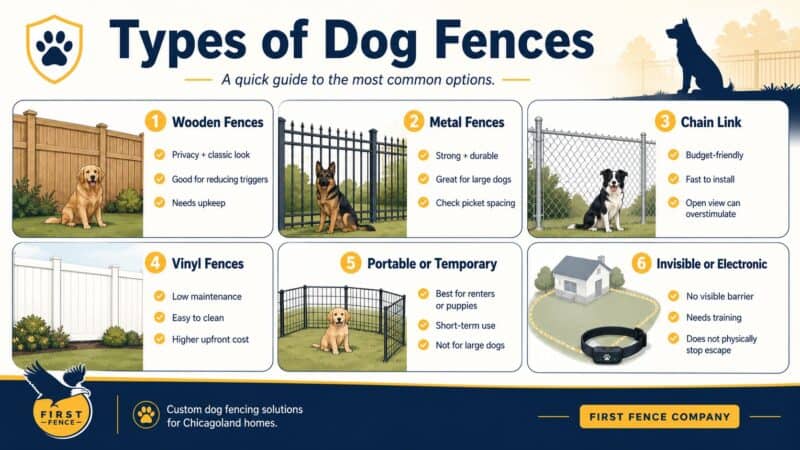
Dog fences come in many forms, from traditional wood and metal to high tech invisible systems. Understanding the differences is key to choosing the right one.
Wooden Fences
Wood fences are a timeless choice. They provide privacy, blend well with natural surroundings and can be customized in height and style. For dog owners, they offer solid containment and reduce the visual distractions that can trigger barking or stress.
Wood does require upkeep. Without regular sealing, it can warp, rot or splinter, posing a hazard to your dog. Some dogs also enjoy chewing or scratching at wood, which can shorten its lifespan if not monitored.
Metal Fences (Aluminum, Steel, Iron)
A metal fence provides strong, clean lines and durability. Aluminum and powder coated steel resist rust and wear especially well, making them excellent choices for large or strong dogs that could break weaker barriers.
Metal dog fences offer a sleek look, but wide picket spacing can allow small dogs to slip through. Some styles let you reduce spacing only at the bottom, adding security without sacrificing design.
If you’re weighing wrought iron against aluminum specifically, our wrought iron vs. aluminum fence comparison covers it in more depth.
Chain Link Fences
Chain link is a go to for many pet owners due to its affordability and strength. It’s fast to install and stands up to wear and tear. For dogs who don’t need privacy or visual barriers, it’s a practical solution.
The drawback is appearance, and the open view can overstimulate dogs who bark at everything they see. Privacy slats or vinyl coating can soften the look and improve functionality.
Vinyl Fences
Vinyl combines beauty with low maintenance. It won’t rot, peel or warp, and it comes in various styles, including some that mimic wood grain. For dogs who dig, scratch or get dirty often, vinyl is easy to hose off and lasts for years with minimal upkeep.
The cost is higher than some materials, but for many homeowners, the reduced maintenance more than makes up for it over time.
Portable and Temporary Fences
For renters or those with temporary fencing needs, portable panels or mesh fences offer a short term solution. These work best for small dogs or puppies and can be used indoors or in compact outdoor spaces.
They lack the durability and height needed for larger dogs, and they’re more prone to tipping if leaned on or jumped at.
Invisible Dog Fences and Electronic Fences
These systems use buried wires or GPS to create an invisible boundary. A collar worn by your dog emits a warning beep or mild correction as they approach the perimeter.
While they preserve open views and satisfy strict village permit rules in some neighborhoods, they don’t physically stop your dog, or anything else, from crossing the boundary. Training is essential, and not all dogs respond equally to the system.
Which Fence Is Best for Your Dog’s Behavior?
Once you know how your dog tries to get out, or get worked up, matching a fence gets a lot easier.
Dogs That Jump
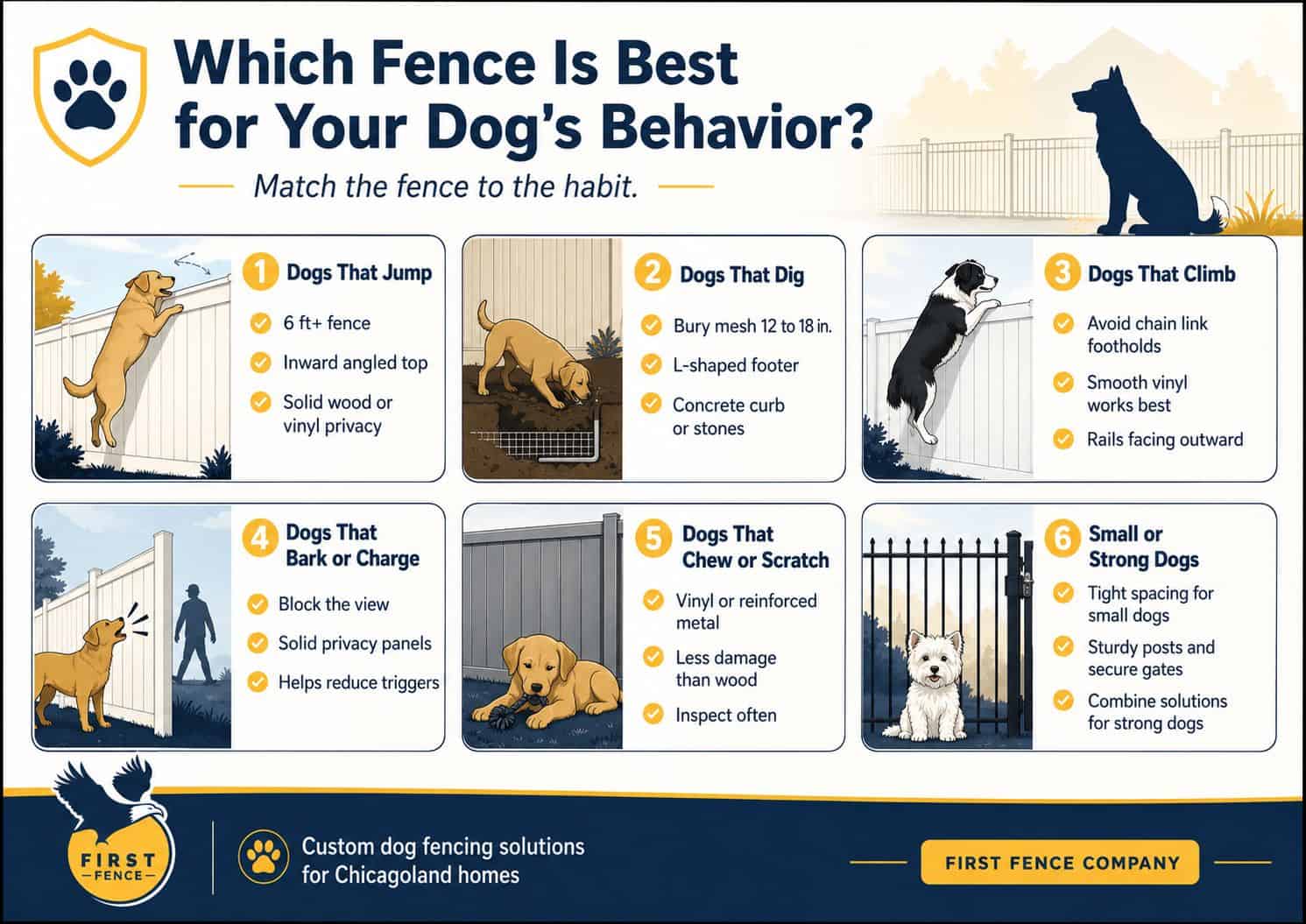
Athletic jumpers need height. A 4 foot fence rarely holds up against a determined Lab or Husky, so we usually recommend at least 6 feet for jumpers. Solid wood or vinyl privacy fencing helps too, since removing the view of the outside world takes away a lot of the reasons to jump in the first place.
Dogs That Dig
Height alone won’t stop a determined digger. What generally works is reinforcement below the fence line, like galvanized wire mesh buried 12 to 18 inches down or large landscaping stones along the fence. Vinyl holds up well here since it won’t rot from constant contact with damp soil, though underground reinforcement can still sometimes be worth the investment.
Dogs That Climb
Chain link and anything with horizontal rails gives a climber something to grip. A smooth vinyl privacy fence takes that away, and solid wood works well too as long as the rails face outward, away from your dog. An inward angled top extension adds extra insurance for the most determined climbers.
Dogs That Bark or Charge the Fence
If your dog loses it every time a car, a squirrel, or the neighbor’s dog goes by, a solid privacy fence in wood or vinyl can calm things down considerably just by blocking the view. Privacy slats can help soften a chain link fence too, though they won’t fully replace a solid panel. Since blocking sightlines and blocking sound rely on similar principles, our post on fences for noise reduction is worth a look if your dog reacts to noise as much as movement.
Dogs That Chew or Scratch
Wood takes the most damage from a determined chewer, and splintered boards can turn into a real hazard for paws and noses. Vinyl or reinforced metal tends to hold up better here, though any fence a dog works on regularly needs frequent checks for damage.
Small Dogs and Tight Spaces
Small dogs need narrow picket spacing and no daylight showing near the ground. Ornamental fencing can be built with tighter spacing low and a more open look higher up, and it’s worth double checking gates, corners, and sloped sections too. A gap that looks too small to matter often isn’t.
Large or Strong Dogs
Big, strong dogs need sturdy posts, secure gates, and hardware that won’t give under repeated pressure, plus gate latches placed where your dog can’t reach or fiddle with them. If your dog jumps, climbs, and digs, you may need to combine solutions, like a 6 foot solid fence with underground reinforcement, heavy duty gate hardware, and an angled top, rather than relying on any single fix.
Safety Considerations for Dog Fences
Every fence type carries its own set of risks if it isn’t installed and maintained properly, and knowing what to look for can save you a vet visit.
A wood fence can develop splinters or gaps over time, especially if boards loosen. Small dogs can get stuck in damaged panels or dig underneath if the bottom isn’t secured. Metal fences may have pointed tops or sharp welds that injure paws or noses. Chain link can fray or curl at the base, creating snags or escape paths.
Vinyl panels offer fewer hazards, but like any material, they should be checked regularly for cracks or shifts caused by weather or impact. Invisible fences rely heavily on collar function, and a dead battery or loose fit can render the system ineffective.
To keep your dog safe, check your fence often for structural issues, holes, sharp edges or digging signs. A quick walk through every few weeks catches most problems before they become serious.
How Is a Dog Fence Installed and Maintained?
Installation Methods
Professional installation offers a precision and durability that DIY efforts often lack. At First Fence Company, we handle everything from property assessment and permit coordination to proper post anchoring and alignment, using footing depths suited to Chicagoland’s frost line.
We also provide access to higher quality materials not available to the general public, thanks to long standing relationships with trusted manufacturers and distributors. These materials often outperform what’s available at big box stores. With over 35 years installing fences across the Chicago area, our crews know what it takes to build a fence that is safe, secure and built to last. DIY solutions can work for temporary or basic fencing, but larger projects usually call for proper excavation, structural stability and code compliance, which is best handled by an experienced installer. See our full installation process for what to expect.
Maintenance Needs
- Each fence material asks for a different level of upkeep:
- Wood fencing needs re-staining or painting every 2 to 3 years to stay weatherproof.
- Metal should be inspected for rust, especially at joints or near the ground.
- Vinyl requires occasional cleaning but is otherwise maintenance free.
- Chain link may sag or bend over time, particularly at corners.
Invisible systems need signal checks and collar battery replacements monthly. - Investing time in maintenance keeps your fence functional and keeps your dog safe.
Cost Considerations
Dog fencing costs vary widely based on materials, yard size and installation complexity. Here’s what typically affects pricing.
Materials are the biggest factor. Chain link is typically the most budget friendly, wood and white vinyl fall in the mid-range, and most colored vinyl or ornamental metal cost more upfront but tend to offer greater longevity. Fence height, style and the specific grade of material also affect the total price.
Labor is another variable. Professional installation adds to your budget but saves time and reduces the risk of costly mistakes. DIY projects can lower costs, but they require tools, time and confidence in your own skills.
Add-ons like gates or privacy panels add to the final price, but they’re often worth the investment for a dog owner.
If you’re watching your budget, chain link remains one of the most cost effective options for dog containment. Long term value also means choosing a product that won’t need frequent repairs or early replacement.
What Fence Should You Choose for a Large Dog?
Large breeds bring a different level of challenge to fencing. A small miscalculation in height or strength can mean repeated escapes or an injury.
For tall, athletic dogs, we recommend fences at least six feet high. Some breeds may need angled extensions or double barriers. Materials matter too. Wood can splinter under pressure, while welded steel or reinforced vinyl better withstand jumping and chewing.
Large dogs often dig more aggressively than smaller breeds, so underground reinforcement or concrete footings may be needed to stop them from tunneling out.
Ready to Choose the Right Fence for Your Dog?
A well chosen dog fence is more than a yard divider. It’s a commitment to your pet’s safety and your household’s comfort. As we’ve covered, every fence type comes with its own benefits and tradeoffs.
Wood offers privacy and charm but needs upkeep. Chain link is affordable and durable, though not always attractive. Vinyl brings a modern, low maintenance appeal. Metal provides strength, and invisible fences deliver a minimalist solution with more risk attached.
Your decision comes down to your dog’s size, habits and energy level, your yard, local rules, and your aesthetic goals. Budget matters, but so does quality, and the right investment saves you time, stress and repairs down the road.
First Fence Company can guide you through every step, from product selection to professional pet fence installation. We customize fence installations for specific dog breeds across Chicagoland including locations Elmhurst, Westchester, Naperville, Hillside, Oak Park, Downers Grove, Lombard, Des Plaines and nearby areas, factoring in behavior patterns, energy levels and yard layout. Reach out today to get started. Call Now: 708.547.7555 or get a free quote.
Common Questions About Fencing for Dogs
What is the best fence to stop a dog from escaping?
A solid 6 foot privacy fence, in either vinyl or wood, stops the most dogs from escaping because it removes the visual triggers that cause jumping and is hard to climb. Dogs that dig also need buried mesh or a concrete footing at the base to stay contained.
What is the cheapest fence for a dog?
Chain link is typically the least expensive option per linear foot. It works well for calm dogs in larger yards, though it offers little privacy and can be climbed by agile breeds.
Do dogs need a 6 foot fence?
Most dogs are contained comfortably behind a 4 foot fence, but athletic jumpers such as Labrador Retrievers, Huskies and German Shepherds often need at least 6 feet.
What stops a dog from digging under a fence?
Burying galvanized wire mesh 12 to 18 inches below the fence line, adding an L-shaped footer, or pouring a concrete curb along the base are the most reliable ways to stop digging.
Is vinyl or wood better for a dog?
Vinyl generally holds up better for dogs that dig, chew or bring mud into the yard, since it won’t rot or need refinishing. Wood offers a similar visual barrier at a lower upfront cost but needs periodic staining or sealing.
Are invisible fences safe for dogs?
Invisible fences can work for well trained dogs in neighborhoods with strict village permit rules, but they don’t stop other animals from entering the yard and rely entirely on a working collar, so they carry more risk than a physical fence.
What is the best perimeter fence for dogs?
A 6 foot solid vinyl or wood privacy fence makes the best perimeter fence for most dogs, since it blocks the sightlines that trigger barking and jumping while giving a hard barrier that’s difficult to climb. Pair it with buried wire mesh or a concrete curb at the base for dogs that dig.
What is an invisible dog fence?
An invisible dog fence uses a buried wire or a GPS signal to mark a boundary line, paired with a collar that gives your dog a warning tone or a mild static correction as they approach the edge. It keeps your yard open but needs consistent training and a reliably charged collar to work.
How does a wireless dog fence work?
A wireless dog fence sends a radio signal from a base station to create a circular boundary around your yard, with no wire to bury. The collar beeps or vibrates as your dog nears the edge, then delivers a mild correction if they continue, and coverage is usually limited to about a half acre from the base station.