
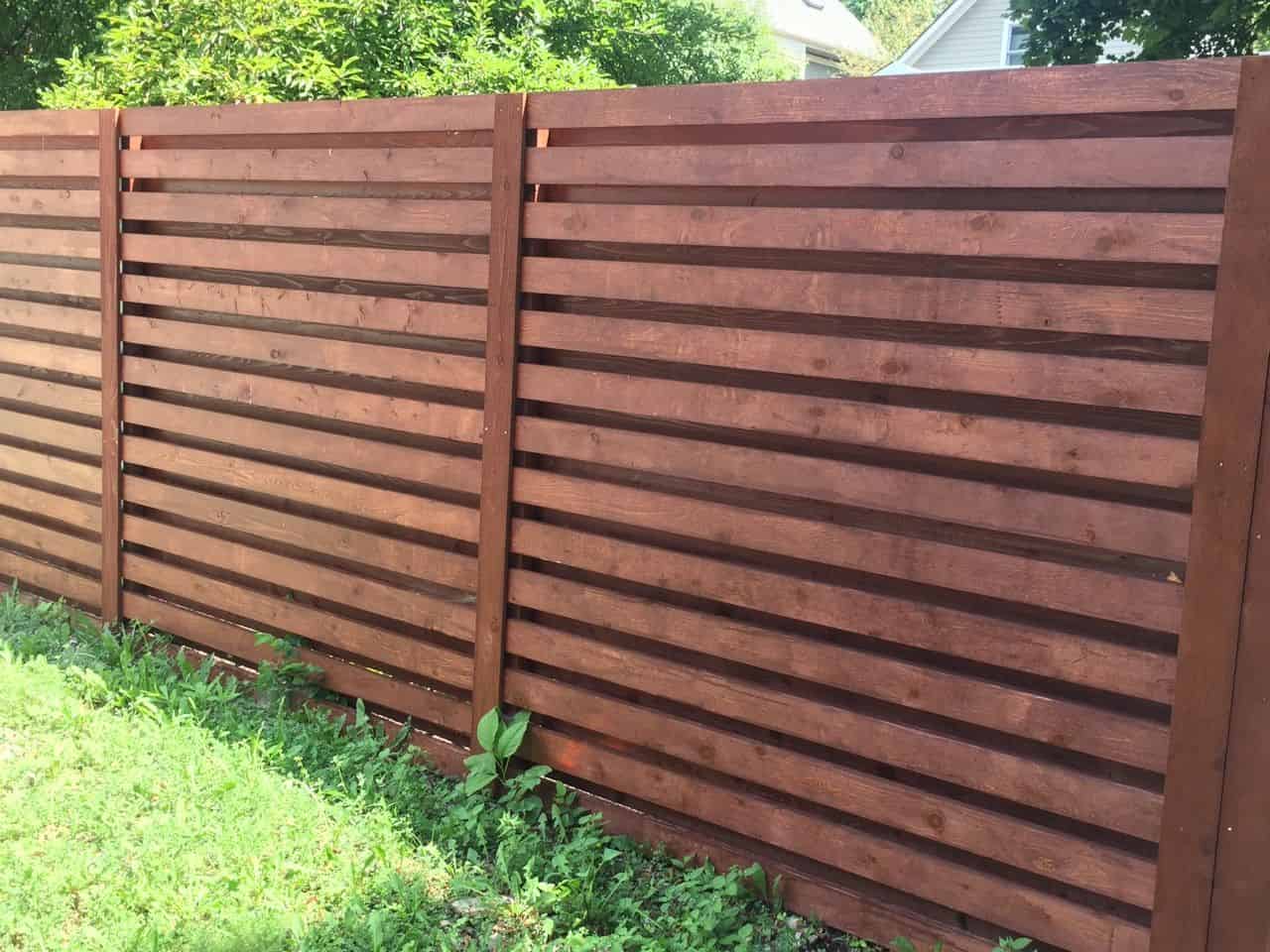
When planning a fence improvement project, deciding between painting and staining depends on your desired look, maintenance needs, and durability goals. The process of staining and painting a fence does have similar and differing processes.
Painting a fence consists of applying a thick coat of paint over the timbers of your wood, which can also cause moisture to build up within the wood and cause issues with rotting. Although this can be personalized to the homeowner’s favorite hue, over time, the paint can begin to peel and crack. Additionally, repainting is recommended every 1-3 years. Remember, to repaint your fence, you must remove all previous paint from the surface and then repaint it.
Staining involves soaking the product into the wood grain for a deeper treatment. This process lasts longer and doesn’t cause the same issues with peeling or cracking. Just power-wash with a cleaner, and that will be sufficient.
Need a custom color? Stain comes in a variety of colors. From transparent to a ‘solid’ finish. As a rule of thumb, the more solid in color a stain is, the more protection your wood will get, but the less of the wood you see. For instance, a semi-transparent stain will offer the protection you need, while keeping the beauty of natural timber visible.
Painting vs Staining Fence: How to Choose?
Painting wood fences offers a mix of aesthetic and protective benefits, but it also comes with trade-offs. Here’s a balanced look at both sides, along with how paint impacts durability.
Advantages to Painting a Fence
- Custom look: Wide range of colors for a clean, uniform finish.
- Protection: Seals wood against moisture, UV rays, and weather damage.
- Improved lifespan: Helps prevent rot and wear when maintained.
- Covers flaws: Hides imperfections in the wood.
Disadvantages to Painting a Fence
- High maintenance: Paint can peel or crack, requiring regular repainting.
- Labor-intensive: Prep work (scraping/sanding) takes time.
- Moisture risk: Damaged paint can trap water and cause rot.
- Environmental impact: Some paints contain harmful chemicals.
Impact on Durability
- Positive: Adds a protective barrier, improving weather resistance.
- Negative: Less breathable than stain, so poor upkeep can lead to damage.
- Key factor: Durability depends on proper application and regular maintenance.
Pros and Cons of Staining a Wood Fence
Staining a wood fence is a popular choice for homeowners who want to protect their fence while preserving its natural beauty. Here is a list of advantages and disadvantages of using stain.
Advantages
- Natural appearance: Enhances the wood grain for a more organic look.
- Wood protection: Penetrates the wood, helping resist moisture and UV damage.
- Lower maintenance: Doesn’t peel or chip like paint.
- Easier application: Typically requires less prep work than painting.
Disadvantages
- Frequent reapplication: Needs to be reapplied every few years.
- Limited color options: Fewer choices compared to paint.
- Less coverage: Doesn’t hide imperfections in the wood.
- Cost over time: Repeated applications can add up.
Impact on Durability
- Positive: Penetrates and protects from within, reducing cracking and warping.
- Breathability: Allows moisture to escape, lowering the risk of rot.
- Key factor: Regular re-staining maintains protection and extends fence life.
Cost Comparison: Paint vs Stain
Choosing between paint and stain often comes down to cost, both upfront and over time. While one may seem cheaper initially, long-term maintenance can shift the overall value.
Painting vs Staining Costs
- Painting: Higher upfront cost due to primer, paint, and more labor-intensive prep.
- Staining: Lower initial cost since it requires fewer materials and less prep work.
Factors That Influence Cost
- Materials: Paint (and primer) is typically more expensive than stain.
- Labor: Painting takes longer (scraping, sanding, priming), increasing labor costs.
- Fence condition: Older fences may require more prep, raising costs for both options.
- Product quality: Premium paints and stains cost more but last longer.
Long-Term Cost Effectiveness
- Paint: Lasts longer per application (5–10 years) but is more expensive to maintain when it eventually peels.
- Stain: Cheaper per application but needs reapplication more often (every 2–4 years).
- Overall: Stain is often more cost-effective in the short term, while paint may balance out over time, depending on maintenance and climate.
Environmental Impact of Paint vs Stain
Staining and painting both leave carbon footprints. Each option has different levels of emissions, waste, and sustainability. However, staining typically has a lower environmental impact.
Paint can have a higher environmental impact due to VOC (volatile organic compound) emissions, which contribute to air pollution and can affect air quality. Some paints also contain chemicals that may leach into soil over time, and leftover paint must be disposed of carefully to avoid contamination.
Stain is often considered a slightly eco-friendlier option, especially water-based stains, which tend to have lower VOC levels. Because stain penetrates the wood instead of forming a surface layer, it’s less likely to chip or peel into the environment. However, it typically requires more frequent reapplication, which can increase overall product use.
There are eco-friendly options for both finishes. Low- or zero-VOC paints and stains, water-based formulas, and natural oil-based products can significantly reduce environmental impact. Choosing these options and disposing of materials properly can make either choice more sustainable.
Weather Effects on Painted vs Stained Fences
Weather greatly affects fence finishes, with paint and stain reacting differently to the elements.
Paint provides strong protection against moisture and UV rays but is prone to cracking and peeling in extreme weather. Stain penetrates the wood, making it more flexible and resistant to cracking, though it offers slightly less surface protection.
Proper prep, such as cleaning, drying, and sealing, along with regular maintenance, helps both finishes last longer. In harsh climates, paint lasts longer between applications but requires more upkeep, while stain needs more frequent reapplication but is easier to maintain.
Conclusion
Choosing between paint and stain comes down to balancing appearance, maintenance, cost, and durability. Paint offers a bold, customizable look and strong surface protection, but it requires more upkeep over time. Stain, on the other hand, enhances the natural beauty of wood and is easier to maintain, though it needs more frequent reapplication.
For homeowners, the right choice depends on priorities. If you prefer a clean, colorful finish and don’t mind periodic prep work, paint may be the better option. If you value a natural look with simpler maintenance, stain is often more practical. Environmental considerations can also play a role, with low-VOC or water-based products available for both options.
Overall, stain is typically the best all-around choice for most wood fences due to its flexibility, ease of maintenance, and ability to age more naturally. However, paint is a strong option for those seeking maximum visual impact and longer intervals between refinishing, if ongoing maintenance is expected.