
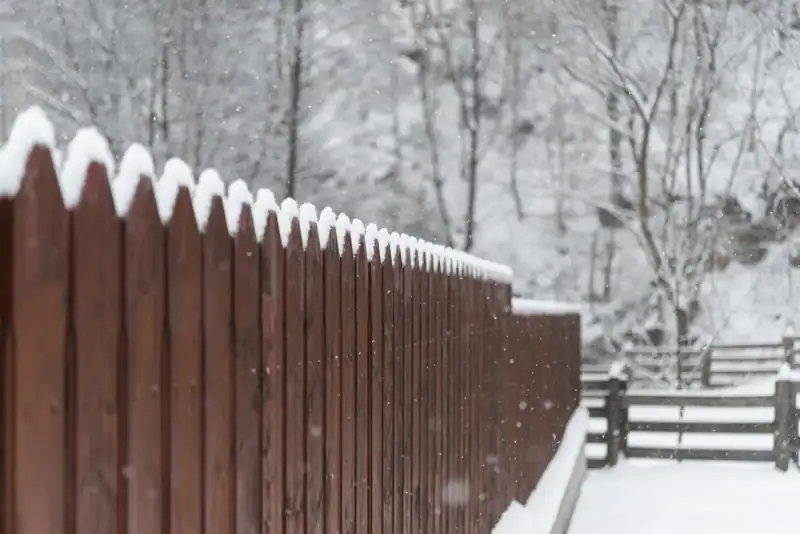
If you’re wondering, can you install a fence in the winter, the answer is usually yes as long as ground conditions are workable and the install is handled the right way. Winter doesn’t shut fence work down. It just changes the process, tools and pacing.
That shift matters because fences are only as strong as their posts. Cold weather affects how you dig, how you set and how materials behave while you’re working. With a smart plan, winter fence installation can be just as solid as a summer build. You just need an experienced crew who knows how to install a fence in winter.
Frozen ground can slow or complicate digging. Crews may need power augers, pre-drilling, or post-driving depending on frost depth and soil type. Freeze-thaw cycles expand and contract soil, which can push shallow posts out of alignment. Materials like wood and vinyl get less forgiving in deep cold, so handling and fastening need extra care. Concrete also cures more slowly, which means installers must use the right mix and timing. Add snow cover and short daylight windows and the job takes more planning too. Schedules are timed around daylight hours and temperatures.
Even with those challenges, the work is still very doable. One upside is winter often brings easier booking, helping some homeowners get ahead of spring demand. If you want a clear read on your yard’s conditions, talk with a crew that installs year-round. First Fence Company’s fence installation services can confirm whether your ground is workable now, which method fits your lot and how quickly the project can move once it starts.
Understanding Ground Freezing And Its Effects
Fence posts need stable soil below them. Winter affects that soil in two ways: it makes it harder to work with today, and it can move after the fence is installed if the posts aren’t set correctly.
How Ground Freezing Affects Fence Installation
The biggest concern is frost heave. Freeze-thaw cycles expand and contract soil. If posts aren’t set below the frost line, that movement can lift or tilt them over time. You might not notice the shift until late winter or early spring, when the ground starts to warm unevenly.
Frost depth varies by region. In some areas it’s a few inches. In colder climates it can be several feet. Either way, the principle stays the same. Posts need to be deeper than the deepest expected freeze so the soil movement happens above the footing, not around it.
Can You Dig Post Holes In Frozen Ground?
Sometimes yes, sometimes no. If the frost is light or recent, crews can usually dig through it with the right tools. If the ground has been frozen solid for weeks, hand digging can turn into a time sink fast. That’s why early winter installs are often easier than late-season installs. Once a deep freeze sets in, contractors may recommend waiting for a warm window or switching methods to avoid fighting the soil.
Techniques For Working With Frozen Ground
Pros handle frozen soil a few ways: mechanical augers or pre-drilling to break the top layer. Gravel under posts improves drainage and reduces ice pressure. Cold-weather mixes or accelerators help concrete set before a hard freeze.
The goal is always the same, no matter the weather. Get a clean, stable post base that won’t shift when temperatures bounce around.
Choosing The Right Materials For Winter Fence Installation
Winter doesn’t force you into one fence type, but it does make material handling and selection more important. Most common fence materials can be installed during winter if they’re rated for outdoor use in your climate and installed with care.
Vinyl is a strong winter option because it doesn’t rot and handles moisture well. That’s helpful in slushy months when wood can stay damp for days. The tradeoff is that vinyl can be less flexible in deep cold, so installers need to avoid forcing rails or panels into place.
In cold air, boards may be stiffer and more prone to splitting if they’re rushed. Pros handle that by using correct fasteners, pre-drilling where needed and keeping boards supported during installation.
Aluminum or steel fencing is stable in temperature swings and usually straightforward for winter installs. Metal doesn’t absorb moisture and doesn’t get brittle like some plastics, making it a solid pick for yards that see heavy snow or ice.
Cold weather doesn’t usually change what you can choose, but it changes what you should prioritize. Weather-resistant materials matter more in winter because exposure is constant and repairs are harder once the ground locks up. If your property deals with drifting snow or wind tunnels between homes, durable panels and strong hardware become even more important.
DIY Vs. Professional Winter Fence Installation
DIY fence installs are possible in winter, but it’s a more difficult job than a summer install. Frozen soil, stiff materials and short daylight mean slower progress and less room for error. If you’re comfortable with equipment and the ground hasn’t fully frozen, a small project can work. But winter is where professional experience pays off.
Why Pros Often Make More Sense In Winter
Most homeowners who start a winter DIY job end up wishing they’d called someone earlier. It’s not about toughness. It’s about winter piling on variables you can’t control.
Professional crews bring advantages that matter more when it’s cold:
- Equipment for frozen soil. Pros don’t show up with shovels and hope. They bring augers, driving tools and bits that cut through frost.
- Frost-line expertise. A good installer knows how deep posts need to go in your area and how to set them to avoid heave later.
- Concrete timing and mix knowledge. If footings are part of your fence, installers know how to work with cold-weather curing.
- Efficiency. Even with winter slowing things down, a crew will typically finish in days where a DIY job can drift into weeks.
Winter fence installation is one of those situations where the margin for error is smaller. A post set a little too shallow or a panel forced into place when it’s brittle can cause problems that don’t show up until spring. If your fence matters for privacy, security or keeping pets safe, that risk usually isn’t worth it.
Winter Fence Maintenance And Repair
Winter can be rough on fences, especially if the fence is older, has moisture damage or loose posts. Watch for a few winter issues. Frost heave can lean posts, especially if they were set shallow. Minor leans may settle back after thawing, but bigger shifts usually need a post reset.
Wood can shrink and vinyl can tighten in cold, creating small gaps that often disappear in spring, so don’t force pieces back together. High winds and ice buildup can loosen panels, so brace or remove damaged sections until repairs are safe. If boards break, replace them quickly to keep moisture out of exposed edges.
How To Maintain A Fence In Winter
You don’t need a long checklist. A few habits go a long way:
- Clear heavy snow buildup. After big storms, brush snow away from the fence line where it’s piled high. Weight that sits against panels for days can cause warping or leaning.
- Watch for standing water. If meltwater pools at the base of posts, it can refreeze and expand. Improving drainage or clearing packed snow helps reduce pressure.
- Check gate movement. Cold can cause subtle shifts. If a gate starts sticking, address it early before strain bends hinges or latches.
- Avoid piling salted snow against wood. De-icing salts can speed up corrosion on metal fasteners and degrade wood over time.
The goal in winter is to prevent small failures from turning into structural ones. A quick fix now can save you from rebuilding a whole run later.
Key Takeaways For Winter Fence Projects
Winter isn’t the obstacle people think it is. Installing a fence in cold months is realistic and sometimes the most practical choice, especially if you need privacy, safety or property boundaries handled sooner rather than later.
What matters most is preparation:
- Know how frozen soil changes the job and be ready to adjust methods.
- Set posts below the frost line and build in drainage so the fence stays straight through freeze-thaw cycles.
- Choose materials that fit your climate and handle them carefully in low temperatures.
- Be honest about DIY limits. Winter installs leave less room for error, so professional help often pays off.
For many homeowners, winter can be a good time to build thanks to easier scheduling. A quick site check from a pro will confirm the best method for your yard and help your fence stay sturdy long after the snow melts.